
CHAPTER I. THE DIGNITY OF THE PRIESTHOOD
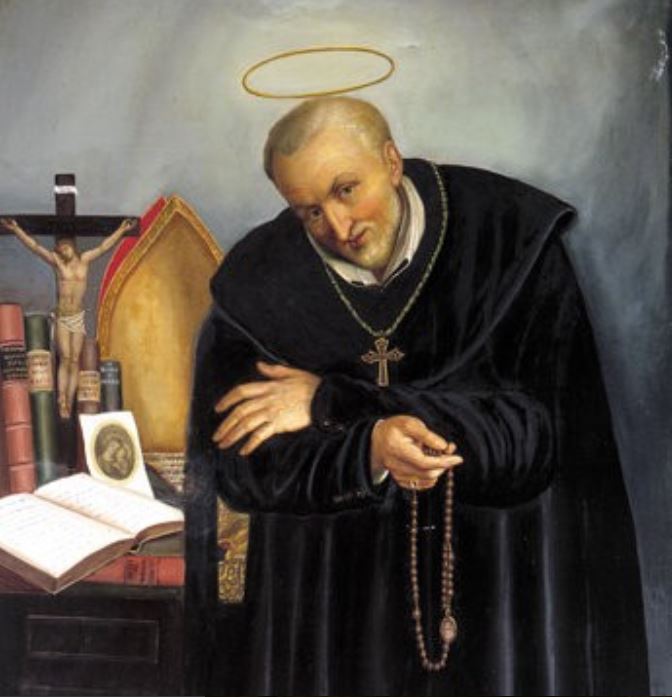
I. Idea of the Priestly Dignity.
IN his epistle to the Christians of Smyrna, St. Ignatius, Martyr, says that the priesthood is the most sublime of all created dignities: “The apex of dignities is the priesthood.” 1 St. Ephrem calls it an infinite dignity: The priesthood is an astounding miracle, great, immense, and infinite.” 2 St. John Chrysostom says, that though its functions are performed on earth, the priesthood should be numbered among the things of heaven. 3 According to Cassian, the priest of God is exalted above all earthly sovereignties, and above all celestial heights he is inferior only to God. 4
1 “Omnium apex est Sacerdotium.” Epist. ad Sniyrn.
2 “Miraculum est stupendum, magna, immensa, infinita Sacerdoti dignitas.” De Sacerdotio,
3 “Sacerdotium in terris peragitur sed in rerum cœlestium ordinem referendum est.” De Saccrd. 1. 3.
4 “O SaceVdos Dei! si altitudinem cœli contemplaris, altior es; si omnium dominorum sublimitatem, sublimior es; solo tuo Creatore inferior es.” Cat al. gloria mundi, p. 4, cons. 6.
Innocent III. says that the priest is placed between God and man; inferior to God, but superior to man.1 .St. Denis calls the priest a divine man. 2 Hence he has called the priesthood a divine dignity. 3 In fine, St. Ephrem says that the gift of the sacerdotal dignity surpasses all understanding. 4 For us it is enough to know, that Jesus Christ has said that we should treat his priests as we would his own person: He that heareth you, heareth me; he that despiseth you, despiseth me? 5 Hence St. John Chrysostom says, that “he who honors a priest, honors Christ, and he who insults a priest, insults Christ.”6 Through respect for the sacerdotal dignity, St. Mary of Oignies used to kiss the ground on which a priest had walked.
1 “Inter Deum et hominem medius constitutes; minor Deo, sed major homine.” In Consecr. Pont. s. 2.
2 “Qui Sacerdotem dixit, prorsus divinum insinuat virum.” De Eccl Hier. c. i.
3 “Angelica, imo divina est dignitas.” Ibid.
4 “Excedit omnem cogitationem donum dignitatis sacerdotalis.” De Saccrd.
5 “Qui vos audit, me audit; et qui vos spernit, me spernit.” Luke, x. 16.
6 “Qui honorat Sacerdotem Christi, honorat Christum; et qui injuriat Sacerdotem Christi, injuriat Christum.” Hom. 17.
II. Importance of the Priestly Office
The dignity of the priest is estimated from the exalted nature of his offices. Priests are chosen by God to manage on earth all his concerns and interests. “Divine,” says St. Cyril of Alexandria, “are the offices confided to priests.” 7
St. Ambrose has called the priestly office a divine profession.8
7 “Genus divinis ministeriis mancipatum.” De Adorat. 1. 13.
8 “Deifica professio.” De Dignit. sac. c. 3.
A priest is a minister destined by God to be a public ambassador of the whole Church, to honor him, and to obtain his graces for all the faithful. The entire Church cannot give to God as much honor, nor obtain so many graces, as a single priest by celebrating a single Mass; for the greatest honor that the whole Church without priests could give to God would consist in offering to him in sacrifice the lives of all men. But of what value are the lives of all men compared with the sacrifice of Jesus Christ, which is a sacrifice of infinite value? What are all men before God but a little dust? As a drop of a bucket, … . as a little dust. 1 They are but a mere nothing in his sight:
All nations are before him as if they had no being at all. Thus, by the celebration of a single Mass, in which he offers Jesus Christ in sacrifice, a priest gives greater honor to the Lord, than if all men by dying for God offered to him the sacrifice of their lives. By a single Mass, he gives greater honor to God than all the angels and saints, along with the Blessed Virgin Mary, have given or shall give to him; for their worship cannot be of infinite value, like that which the priest celebrating on the altar offers to God.
Moreover, in the holy Mass, the priest offers to God an adequate thanksgiving for all the graces bestowed even on the Blessed in Paradise; but such a thanksgiving all the saints together are incapable of offering to him. Hence it is, that on this account also the priestly dignity is superior even to all celestial dignities. Besides, the priest, says St. John Chrysostom, is an ambassador of the whole world, to intercede with God and to obtain graces for all creatures.2 The priest, according to St. Ephrem, “treats familiarly with God.” 3 To priests every door is open.
1 “Quasi stilla situlæ, . . . pulvis exiguus. . . . Omnes gentes, quasi non sint, sic sunt coram eo.” Isa. xl. 15, 17.
2 “Pro universo terrarum orbe legatus intercedit apud Deum.” De Sacerd.1. 6.
3 “Cum Deo familiariter agit.” De Saccrdotio.
Jesus has died to institute the priesthood. It was not necessary for the Redeemer to die in order to save the world; a drop of his blood, a single tear, or prayer, was sufficient to procure salvation for all; for such a prayer, being of infinite value, should be sufficient to save not one but a thousand worlds. But to institute the priesthood, the death of Jesus Christ has been necessary. Had he not died, where should we find the victim that the priests of the New Law now offer? a victim altogether holy and immaculate, capable of giving to God an honor worthy of God. As has been already said, all the lives of men and angels are not capable of giving to God an infinite honor like that which a priest offers to him by a single Mass.
III. Grandeur of the Priestly Power
The dignity of the priest is also estimated from the power that he has over the real and the mystic body of Jesus Christ. With regard to the power of priests over the real body of Jesus Christ, it is of faith that when they pronounce the words of consecration the Incarnate Word has obliged himself to obey and to come into their hands under the sacramental species. We are struck with wonder when we hear that God obeyed the voice of Josue The Lord obeying the voice of man 1 and made the sun stand when he said move not, O sun, towards Gabaon, . . . and the sun stood still. 2
But our wonder should be far greater when we find that in obedience to the words of his priests HOC EST CORPUS MEUM God himself descends on the altar, that he comes wherever they call him, and as often as they call him, and places himself in their hands, even though they should be his enemies.
1 “Obediente Domino voci hominis.” Jos. x. 14.
2 “Sol, contra Gabaon ne movearis. . . . Stetit itaque sol in medio cœli.” Ibid. x. 12.
And after having come, he remains, entirely at their disposal; they move him as they please, from one place to another; they may, if they wish, shut him up in the tabernacle, or expose him on the altar, or carry him outside the church; they may, if they choose, eat his flesh, and give him for the food of others. “Oh, how very great is their power,” says St. Laurence Justinian, speaking of priests.” A word falls from their lips and the body of Christ is there substantially formed from the matter of bread, and the Incarnate Word descended from heaven, is found really present on the table of the altar! Never did divine goodness give such power to the angels. The angels abide by the order of God, but the priests take him in their hands, distribute him to the faithful, and partake of him as food for themselves.”1
With regard to the mystic body of Christ, that is, all the faithful, the priest has the power of the keys, or the power of delivering sinners from hell, of making them worthy of paradise, and of changing them from the slaves of Satan into the children of God. And God himself is obliged to abide by the judgment of his priests, and either not to pardon or to pardon, according as they refuse or give absolution, provided the penitent is capable of it. “Such is,” says St. Maximus of Turin, “this judiciary power ascribed to Peter that its decision carries with it the decision of God.” 2
1 “Maxima illis est collata potestas! Ad eorum pene libitum, corpus Christi de panis transsubstantiatur materia; descendit de cœlo in carne Verbum, et altaris verissime reperitur inmensa! Hoc illis prærogatur ex gratia, quod nusquam datum est Angelis. Hi assistunt Deo; illi contrectant manibus, tribuunt populis, et in se suscipiunt.” Serm. de Euchar.
2 “Tanta ei (Petro) potestas attributa est judicandi, ut in arbitrio ejus poneretur cœleste judicium.” In Nat. B. Petri, hom. 3.
The sentence of the priest precedes, and God subscribes to it, writes St. Peter Damian. 1 Hence St. John Chrysostom thus concludes: “The Sovereign Master of the universe only follows the servant by confirming in heaven all that the latter decides upon earth.” 2
Priests are the dispensers of the divine graces and the companions of God. “Consider the priests,” says St. Ignatius, Martyr, “as the dispensers of divine graces and the associates of God.” 3 “They are,” says St. Prosper, “the glory and the immovable columns of the Church; thay are the doors of the eternal city; through them all reach Christ; they are the vigilant guardians to whom the Lord has confided the keys of the kingdom of heaven; they are the stewards of the king s house, to assign to each according to his good pleasure his place in the hierarchy.”4
Were the Redeemer to descend into a church, and sit in a confessional to administer the sacrament of penance, and a priest to sit in another confessional, Jesus would say over each penitent, “Ego te absolve,” the priest would likewise say over each of his penitents, “Ego te absolve,” and the penitents of each would be equally absolved. How great the honor that a king would confer on a subject whom he should empower to rescue from prison as many as he pleased! But far greater is the power that the eternal Father has given to Jesus Christ, and that Jesus Christ has given to his priests, to rescue from hell not only the bodies but also the souls of the faithful:
1 “Præcedit Petri sententia sententiam Redemptoris.” Serm. 26.
2 “Dominus sequitur servum; et quidquid hic in inferioribus judicaverit, hoc ille in supernis comprobat.” De Verbis Is. Hom.5.
3 “In domo Dei, divinorum bonorum ceconomos, sociosque Dei, Sacerdotes respicite.” Ep. ad Polyc.
4 “Ipsi sunt Ecclesiæ decus, columnæ firmissimæ; ipsi januæ Civitatis æternæ, per quos omnes ingrediuntur ad Christum; ipsi janitores, quibus claves datæ sunt regni cœlorum; ipsi dispensatores regiæ domus, quorum arbitrio dividuntur gradus singulorum.” De Vita cont. 1. 2, c. 2
“The Son,” says St. John Chrysostom, “has put into the hands of the priests all judgment; for having been as it were transported into heaven, they have received this divine prerogative. If a king gave to a mortal the power to release from prison all prisoners, all would pronounce such a one happy; but priests have received from God a far greater power, since the soul is more noble than the body.”1
1 “Omne judicium a Filio illis traditum Nam, quasi in cœlum translati, ad principatum istum perducti sunt. Si cui rex hunc honorem detulerit, ut potestatem habeat quoscunque in carcerem conjectos laxandi, beatus ille judicio omnium fuerit; at vero qui tanto majorem a Deo accepit potestatem, quanto animæ corporibus præstant.” De Sacerd. 1. 3.
IV. The Dignity of the Priest Surpasses all other Created Dignities
Thus the sacerdotal dignity is the most noble of all the dignities in this world. “Nothing,” says St. Ambrose, “is more excellent in this world.” 2 It transcends, says St. Bernard, “all the dignities of kings, of emperors, and of angels.” 3 According to St. Ambrose, the dignity of the priest as far exceeds that of kings, as the value of gold surpasses that of lead. 4
The reason is, because the power of kings extends only to temporal goods and to the bodies of men, but the power of the priest extends to spiritual goods and to the human soul. Hence, says St. Clement, “as much as the soul is more noble than the body, so much is the priesthood more excellent than royalty.” 5
2 “Nihil in hoc sæculo excellentius.” DC Dignit. sac. c. 3.
3 “Prætulit vos, Sacerdotes, regibus et imperatoribus; prætulit Angelis.” Serm. ad Pastor, in syn.
4 “Longe erit inferius, quam si plumbum ad auri fulgorem compares.” De Dignit. sac. c. 2.
5 “Quanto anima corpore præstantior est, tanto est Sacerdotium regno excellentius.” Constit. apost. 1. 2, c. 34.
“Princes,” says St. John Chrysostom, “have the power of binding, but they bind only the bodies, while the priest binds the souls.”
1 The kings of the earth glory in honoring priests: “It is a mark of a good prince,” says Pope St. Marcellinus, “to honor the priests of God.” 2
“They willingly,” says Peter de Blois, “bend their knee before the priest of God; they kiss his hands, and with bowed down head receive his benediction.”
3 “The sacerdotal dignity,” says St. Chrysostom, “effaces the royal dignity; hence the king inclines his head under the hand of the priest to receive his blessing.”4 Baronius relates that when the Empress Eusebia sent for Leontius, Bishop of Tripoli, he said that if she wished to see him, she should consent to two conditions: first, that on his arrival she should instantly descend from the throne, and bowing down her head, should ask his benediction; secondly, that he should be seated on the throne, and that she should not sit upon it without his permission: he added, that unless she submitted to these conditions he should never go to the palace. Being invited to the table of the Emperor Maximus, St. Martin, in taking a draught, first paid a mark of respect to his chaplain, and then to the emperor. In the Council of Nice, the Emperor Constantine wished to sit in the last place, after all the priests, and on a seat lower than that which they occupied; he would not even sit down without their permission. The holy king St. Boleslans had so great a veneration for priests, that he would not dare to sit in their presence.
1 “Habent principes vinculi potestatem, verum corporum solum; Sacerdotes vinculum etiam animarum contingit.” De Sacerd. 1. 3.
2 “Boni principis est Dei Sacerdotes honorare.” Cap. Boni princ. dist. 96.
3 “Reges flexis genibus offerunt ei munera, et deosculantur manum, ut ex ejus contactu sanctificentur.” Serm. 47.
4 “Major est hic principatus quam regis; propterea rex caput submittit manui Sacerdotis.” De Verbis Is. hom. 4.
The sacerdotal dignity also surpasses the dignity of the angels, who likewise show their veneration for the priesthood, says St. Gregory Nazianzen. 1 All the angels in heaven cannot absolve from a single sin. The angels guardian procure for the souls committed to their care grace to have recourse to a priest that he may absolve them : “Although,” says St. Peter Damian, “angels may be present, they yet wait for the priest to exercise his power, but no one of them has the power of the keys of binding and of loosening.”
2 When St. Michael comes to a dying Christian who invokes his aid, the holy archangel can chase away the devils, but he cannot free his client from their chains till a priest comes to absolve him. After having given the order of priesthood to a holy ecclesiastic, St. Francis de Sales perceived, that in going out he stopped at the door as if to give precedence to another. Being asked by the saint why he stopped, he answered that God favored him with the visible presence of his angel guardian, who before he had received priesthood always remained at his right and preceded him, but afterwards walked on his left and refused to go before him. It was in a holy contest with the angel that he stopped at the door. St. Francis of Assisi used to say, “If I saw an angel and a priest, I would bend my knee first to the priest and then to the angel.” 
Besides, the power of the priest surpasses that of the Blessed Virgin Mary; for, although this divine Mother can pray for us, and by her prayers obtain whatever she wishes, yet she cannot absolve a Christian from even the smallest sin.”
1 Sacerdotium ipsi quoque Angeli venerantur.” Orat. ad Naz. tint. perc.
2 “Licet assistant Angeli, præsidentis (Sacerdotis) imperium exspectantes, nullus tamen eorum ligandi atque solvendi possidet potestatem.” Serm. 2.6.
“The Blessed Virgin was eminently more perfect than the apostles,” says Innocent III.; “it was, however, not to her, but only to the apostles, that the Lord intrusted the keys of the kingdom of heaven.”1 St. Bernardine of Sienna has written: “Holy Virgin, excuse me, for I speak not against thee: the Lord has raised the priesthood above thee.” 2 The saint assigns the reason of the superiority of the priesthood over Mary; she conceived Jesus Christ only once; but by consecrating the Eucharist, the priest, as it were, conceives him as often as he wishes, so that if the person of the Redeemer had not as yet been in the world, the priest, by pronouncing the words of consecration, would produce this great person of a Man-God. “O wonderful dignity of the priests,” cries out St. Augustine; “in their hands, as in the womb of the Blessed Virgin, the Son of God becomes- incarnate.”3
Hence priests are called the parents of Jesus Christ: 4 such is the title that St. Bernard gives them, for they are the active cause by which he is made to exist really in the consecrated Host.

Thus the priest may, in a certain manner, be called the creator of his Creator, since by saying the words of consecration, he creates, as it were, Jesus in the sacrament, by giving him a sacramental existence, and produces him as a victim to be offered to the eternal Father.
1 “Licet Beatissima Virgo excellentior fuerit Apostolis, non tamen illi, sed istis Dominus claves regni cœlorum commisit.” Cap. Nova quædam. De Pœnit.
2 “Virgo benedicta, excusa me, quia non loquor contra te: Sacer-dotium ipse prætulit supra te.” T. i, s. 20, a. 2, c. 7.
3 “O veneranda Sacerdotum dignitas, in quorum manibus, veldt in utero Virginis, Filius Dei incarnatur.” Molina. Instr. Sacerd. tr. i,c. 5, 2.
4 “Parentes Christi.” S. ad Past, in syn.
As in creating the world it was sufficient for God to have said, Let it be made, and it was created He spoke, and they were made? 1so it is sufficient for the priest to say, “Hoc est corpus meum,” and behold the bread is no longer bread, but the body of Jesus Christ. “The power of the priest,” says St. Bernardine of Sienna, “is the power of the divine person; for the transubstantiation of the bread requires as much power as the creation of the world.”2 And St. Augustine has written, “O venerable sanctity of the hands! O happy function of the priest! He that created (if I may say so) gave me the power to create him; and he that created me without me is himself created by me!”3 As the Word of God created heaven and earth, so, says St. Jerome, the words of the priest create Jesus Christ.4
“At a sign from God there came forth from nothing both the sublime vault of the heavens and the vast extent of the earth; but not less great is the power that manifests itself in the mysterious words of the priest.” The dignity of the priest is so great, that he even blesses Jesus Christ on the altar as a victim to be offered to the eternal Father. In the sacrifice of the Mass, writes Father Mansi, Jesus Christ is the principal offerer and victim; as minister, he blesses the priest, but as victim, the priest blesses him.
1 “Ipse dixit, et facta sunt.” Ps. xxxii. 9.
2 “Potestas Sacerdotis est sicut potestas Personarum divinarum; quia, in panis transsubstantiatione, tanta requiritur virtus, quanta in mundi creatione.” Loco cit.
3 “O venerabilis sanctitudo manuum! o felix exercitium! Qui creavit me (si fas est dicere) dedit mihi creare se; et qui creavit me sine me ipse creavit se mediante me!”
4 “Ad nutum Domini, ex nihilo substiterunt excelsa cœlorum, vasta terrarum; ita parem potentiam in spiritualibus Sacerdotis verbis præbet virtus.” Hom, de Corpore Chr.
V. Elevation of the Post Occupied by the Priest
The greatness of the dignity of a priest is also estimated from the high place that he occupies.
The priesthood is called, at the synod of Chartres, in 1550, the seat of the saints. Priests are called Vicars of Jesus Christ, because they hold his place on earth. “You hold the place of Christ,” says St. Augustine to them; “you are therefore his lieutenants.”1 In the Council of Milan, St. Charles Borromeo called priests the representatives of the person of God on earth. 2 And before him, the Apostle said: For Christ we are ambassadors, God, as it were, exhorting by us?3
When he ascended into heaven, Jesus Christ left his priests after him to hold on earth his place of mediator between God and men, particularly on the altar. “Let the priest,” says St. Laurence Justinian, “approach the altar as another Christ.”4 According to St. Cyprian, a priest at the altar performs the office of Christ. 5 When, says St. Chrysostom, you have seen a priest offering sacrifice, consider that the hand of Christ is invisibly extended. 6 The priest holds the place of the Saviour himself, when, by saying “Ego te absolvo,” he absolves from sin, This great power, which Jesus Christ has received from his eternal Father, he has communicated to his priests. “Jesus,” says Tertullian, “invests the priests with his own powers.” 7 To pardon a single sin requires all the omnipotence of God. “O God, who chiefly manifestest Thy almighty power in pardoning and showing mercy,”8 etc., says the holy Church in one of her prayers.
1 “Vos estis Vicarii Christi, qui vicem ejus geritis.” Ad Fr. in er. s. 36.
2 “Dei personam in terris gerentes.”
3 “Pro Christo legatione fungimur, tamquam Deo exhortante per nos.” 2 Cor. v. 20.
4 “Accedat Sacerdosadaltaris tribunal ut Christus.” Serm. De Euchar.
5 “Sacerdos vice Christi vere fungitur.” Ep. ad Occil.
6 “Cum videris Sacerdotem offerentem, consideres Christi manum in- visibiliter extensam.” Ad pop. Ant. hom. 60.
7 “De suo vestiens Sacerdotes.”
8 “Deus, qui omnipotentiam tuam parcendo maxime et miserendo manifestas.” Dam. iv post Pent.

Hence, when they heard that Jesus Christ pardoned the sins of the paralytic, the Jews justly said: Who can forgive sins but God alone. 1 But what only God can do by his omnipotence, the priest can also do by saying “Ego te absolve a peccatis tuis;” for the forms of the sacraments, or the words of the forms, produce what they signify. How great should be our wonder if we saw a person invested with the power of changing a negro into a white man; but the priest does what is far more wonderful, for by saying “Ego te absolvo” he changes the sinner from an enemy into the friend of God, and from the slave of hell into an heir of paradise. Cardinal Hugo represents the Lord addressing the following words to a priest who absolves a sinner: “I have created heaven and earth, but I leave to you a better and nobler creation; make out of this soul that is in sin a new soul, that is, make out of the slave of Satan, that the soul is, a child of God. I have made the earth bring forth all kinds of fruit, but to thee I confide a more beautiful creation, namely, that the soul should bring forth fruits of salvation.”
2 The soul without grace is a withered tree that can no longer produce fruit; but receiving the divine grace, through the ministry of a priest, it brings forth fruits of eternal life. St. Augustine says, that to sanctify a sinner is a greater work than to create heaven and earth.3
And hast thou, says Job, an arm like God, and canst thou thunder with a voice like Him?4
1 “Quis potest dimittere peccata, nisi solus Deus?” Luke, v. 21.
2 “Ego feci cœhim et terram; verumtamen meliorem et nobiliorem creationem do tibi: fac novam animam quæ est in peccato. Ego feci ut terra produceret fructus suos; do tibi meliorem creationem, ut anima fructus suos producat.”
3 “Prorsus majus hoc esse dixerim, quam est cœlum et terra, et quæ- cunque cernuntur in cœlo et in terra.” In Jo. tr. 72.
4 “Et si habes brachium sicut Deus, et si voce simili tonas?” Job xl. 4
Who is it that has an arm like the arm of God, and thunders with a voice like the thundering voice of God ? It is the priest, who, in giving absolution, exerts the arm and voice of God, by which he rescues souls from hell.
According to St. Ambrose, a priest, in absolving a sinner, performs the very office of the Holy Ghost in the sanctification of souls. 1 Hence, in giving priests the power of absolving from sin, the Redeemer breathed on them, and said to them, Receive ye the Holy Ghost: whose sins you shall forgive, they are forgiven; and whose sins you shall retain, they are retained.2 He gave them his own Spirit, that is, the Holy Ghost, the sanctifier of souls, and thus made them, according to the words of the Apostle, his own coadjutors: We are God’s coadjutors. 3 “On priests,” says St. Gregory, “it is incumbent to give the final decision, for by the right that they have received from the Lord they now remit, now retain sins.”4 St. Clement, then, had reason to say that the priest is, as it were, a God on earth. 5
God, said David, stood in the congregation of the gods. 6 These gods are, according to St. Augustine, the priests of God. 7 Innocent III. has written: “Indeed, it is not too much to say that in view of the sublimity of their offices the priests are so many gods.”8
1 “Munus Spiritus Sancti, officium Sacerdotis.”
2 “Insufflavit, et dixit eis: Accipite Spiritum Sanctum: quorum remi- seritis peccata, remittuntur eis; et quorum retinueritis, retenta sunt.” John, xx. 22.
3 “Dei enim sumus adjutores.” I Cor. iii. 9.
4 “Principatum superni judicii sortiuntur; ut, vice Dei, quibusdam peccata retineant, quibusdam relaxent.” In Evang. Hom.26.
5 “Post Deum, terrenus Deus.” Const, a post. 1. 2, c. 26.
6 “Deus stetit in synagoga Deorum.” Ps. Ixxxi. i.
7 “Dii excelsi, in quorum synagoga Deus Deorum stare desiderat.” Ad Fr. in er. s. 36.
8 “Sacerdotes, propter officii dignitatem, Deorum nomine nuncupantur.” Can. Cum ex injuncto. De Haret.
VI. Conclusion
How great, then, says St. Ambrose, the disorder to see in the same person the highest dignity and a life of scandal, a divine profession and wicked conduct! 1
What, says Salvian, is a sublime dignity conferred on an unworthy person but a gem enchased in mire?
2
Neither doth any man, says St. Paul, take the honor to himself, 3 but he that is called by God, as Aaron was. For Christ did not glorify Himself that He might be made a high priest; but He that said unto Him: Thou art my Son; this day have I begotten Thee? Let no one, he says, dare to ascend to the priesthood, without first receiving, as Aaron did, the divine call; for even Jesus Christ would not of himself assume the honor of the priesthood, but waited till his Father called him to it. From this we may infer the greatness of the sacerdotal dignity. But the greater its sublimity, the more it should be dreaded. “For,” says St. Jerome, “great is the dignity of priests; but also, when they sin, great is their ruin. Let us rejoice at having been raised so high, but let us be afraid of falling.”4
1 “Ne sit honor sublimis, et vitadeformis; deifica professio, et illicita actio. Actio respondeat nomini.” De Dignat. sac. c. 3.
2 “Quid est dignitas in indigno, nisi ornamentum in luto?” Ad Ecd. cath. 1. 2.
3 “Nee quisquam sumit sibi honorem, sed qui vocatur a Deo, tam- quam Aaron. Sic et Christus non semetipsum clarificavit ut Pontifex fieret, sed qui locutus est ad eum: Filius meus es tu; ego hodie genui Mt.”Heb. v. 4.
4 “Grandis dignitas Sacerdotum, sed grandis ruina eorum, si peccant. Lætemur ad ascensum, sed timeamus ad lapsum.” In Ezech. c. 44.

Lamenting, St. Gregory cries out: “Purified by the hands of the priest the elect enter the heavenly country, and alas! priests precipitate themselves into the fire of hell!”1 The saint compares priests to the baptismal water which cleanses the baptized from their sins, and sends them to heaven, “and is afterwards thrown into the sink.”2
1 “Ingrediuntur electi, Sacerdotum manibus expiati, cœlestem patriatn: et Sacerdotes ad inferni supplicia festinant !”
2 “Et ipsa in cloacas descendit!” In Evang. Hom.17.