
CHAPTER IX. THE ZEAL OF THE PRIEST
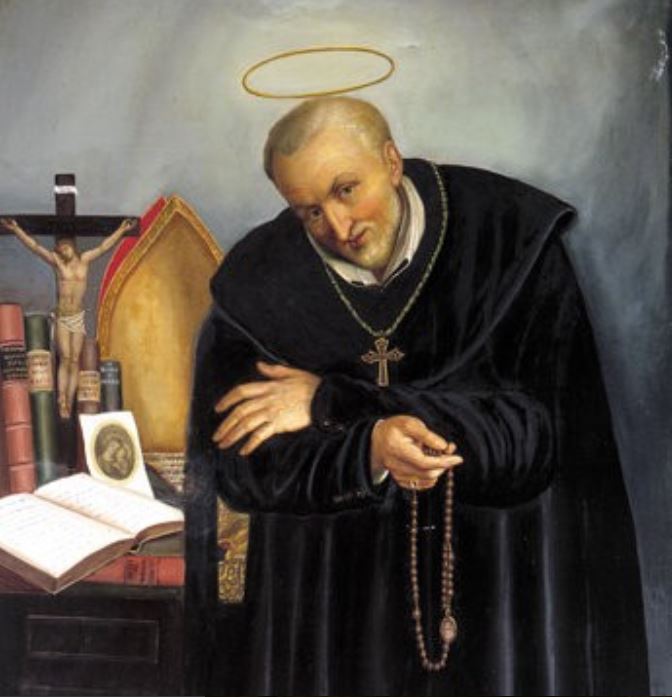
(In giving the spiritual exercises to the clergy, the sermon on zeal is the most necessary, and may be the most useful of all; for if one of the priests who assist at the exercises resolves (as we ought to hope through the divine grace) to employ himself in procuring the salvation of souls, God will gain not one but a hundred and a thousand souls, who will be saved through the labors of that priest.)
WE shall speak in this chapter:
1. Of the obligation of priests to labor for the salvation of souls.
2. Of the pleasure that a priest who seeks the salvation of souls gives to God.
3. Of the eternal glory and the great reward that a priest who labors for the salvation of souls may expect from God.
I. The Obligation of Every Priest to Labor for the Salvation of Souls.
“In the world there are at the same time many and few priests many in name, but few in reality,” says the author of the “Imperfect Work.” 1
The world is filled with priests, but few of them labor to be priests; that is, to fulfil the duty and obligations of a priest, or to save souls. The dignity of priests is great, because they are the coadjutors of God. ” We are God’s coadjutors.”2
1 “Multi Sacerdotes, et pauci Sacerdotes: multi nomine, pauci opere.” Hom. 43.
2 “Dei enim sumus adjutores.” I Cor. iii. 9.
And what greater dignity, says the Apostle, than that of cooperating with Jesus Christ in saving the souls which he has redeemed ? Hence St. Denis the Areopagite calls the dignity of the priest a divine dignity, and even the most divine of all divine things. For, as St. Augustine says, it requires more power to sanctify a sinner than to create heaven and earth.
St. Jerome used to call priests the saviours of the world. 1 St. Prosper calls them the administrators of the royal house of God. 2 And, long before, Jeremias called them the fishers and sportsmen of the Lord: Behold, I will send many fishers, saith the Lord, and after this I will send many hunters, and they shall hunt them from every mountain and from every hill, and out of the holes of the rocks 3
St. Ambrose 4 explains this passage of priests who gain to God the most abandoned sinners, and deliver them from all their vices. The mountain signifies pride; the hill, pusillanimity; and the holes of the rocks, bad habits, which bring with them darkness of understanding and coldness of heart. Peter de Blois says that in the work of creation God had no one to assist him, but in the mystery of redemption he wished to have coadjutors. 5 Who on this earth is superior to the priest? “To the king are intrusted earthly things; to me, a priest, heavenly things,” 6 says St. Chrysostom.
1 “Sacerdotes Dominus mundi esse voluit salvatores.” InAbdiam, 21.
2 “Dispensatores regiæ domus.” De vita cont. 1. 2, c. 2.
3 “Ecce ego mittam piscatores multos, dicit Dominus, et piscabuntur eos; et post hæc, mittam eis multos venatores, et venabuntur eos de omni monte, et de omni colle, et de cavernis petrarum.” Jer, xvi. 16.
4 In Ps. 118, s. 6.
5 “In opere creationis, non fuit qui adjuvaret; in mysterio vero redemptionis, voluit habere coadjutores.” Serm. 47.
6 “Regi, quæ hie sunt, commissa sunt; mini cœlestia, mihi Sacerdoti.” De Verbis Is. hom. 4.
 And Innocent III. adds: “Although the dignity of the Blessed Virgin was greater than that of the apostles, yet to these, and not to her, were given the keys of the kingdom of heaven.”1
St. Peter Damian calls the priest the leader of the people of God. 2 St. Bernard styles him the guardian of the Church, which is the spouse of Jesus Christ. 3 St. Clement, an earthly god. 4 For by the ministry of priests the saints are formed on earth. St. Flavian says that all the hope and salvation of men is placed in the hands of priests. 5 And St. John Chrysostom writes, “Our parents generate us for the present life, priests for life eternal.” 6 Without priests, says St. Ignatius Martyr, there would be no saints on this earth. 7 And, long before, holy Judith said that on priests depends the salvation of the people. You are the ancients among the people of God, and their very soul resteth upon you
8 The priest is the author of holiness of life in seculars, and on him depends their salvation. Hence St. Clement has said: “Honor priests as those that effect good conduct in others.” 9
Great, then, beyond measure, is the dignity and office of priests, but great also is their obligation to labor for the salvation of souls.
1 “Licet Beatissima Virgo excellentior fuerit Apostolis, non tamen illi, sed istis Dominus claves regni cœlorum commisit.” Cap. Nova quædam, de Pœn. et Rem.
2 “Sacerdos, dux exercitus Domini.” Opusc. 25, c. 2.
3 “Sponsæ Custodem.” In Cant. s. 77.
4 “Post Deum, terrenus deus.” Const. Apost. 1. 2, c. 26.
5 “Nihil honorabilius Sacerdotibus; omnis enim spes atque salus in iis est.” Ep. ad S. Leon.
6 “Parentes in præsentem, Sacerdotes in vitam æternam nos generant.” De Sacerd. I. 3.
7 “Absque Sacerdotibus, nulla sanctorum congregatio.” Ep. ad Trall.
8 “Vos estis presbyteri in populo Dei, et ex vobis pendet anima illorum.” Judith, viii. 21.
9 “Honorate Sacerdotes, ut bene vivendi auctores.”
For, says the apostle, every high- priest taken from among men, in the things that appertain to God, that he may offer up gifts and sacrifices for sins.1 He afterwards proceeds to say: Who can have compassion on them that are ignorant.2 The priest, then, is appointed by God as well to honor him by sacrifices, as also to save souls by instructing and converting sinners.
A kingly priesthood . . . a purchased people.3 The order of ecclesiastics differs altogether from that of seculars. The latter attend to the things of the world and to them selves, but the former are a purchased people; a people whose business it is to gain not the goods of this earth, but the souls of men, says St. Ambrose. 4 St. Antonine says that the very name of the priest explains the nature of his office, for sacerdos signifies “he that teaches holy things.”5 And St. Thomas says, “He that distributes holy things.” 6 Honorius of Autun says, presbyter signifies “he that shows the way from exile to our Country.”7 ; St. Ambrose calls priests the ” leaders of the flock of Christ.”8 Hence the saint says in another place: “May the name and the works agree, so that the name may not remain a vain title and may not become the cause of terrible crime.” 9 
1 “Omnis namque Pontifex ex hominibus assumptus, pro hominibus constituitur in iis quæ sunt ad Deum, ut offerat dona et sacrificia pro peccatis.” Heb. v. i.
2 “Qui condolere possit iis qui ignorant et errant.” Ibid. v. 2.
3 “Regale sacerdotium, . . . populus acquisitions. ” i Pet. ii. 9.
4 ” Clericatus officium est quæstus, non pecuniarum, sed animarum.” Serm. 78.
6 “Sacerdos, id est, sacra docens.” Summ. p. 3, tit. 14, c. 7, i.
6 “Sacerdos, quasi sacra dans.” P. 3, q. 22, a. i.
7 “Presbyter dicitur præbens iter populo de exsilio ad patriam.” Gemma, an. 1. i, c. 181.
8 “Duces et Rectores gregis Christi.” De Dignit. sac. c. 2.
9 ” Nomen congruat actioni, ne sit nomen inane, crimen immane.” Ibid. c. 3.
If, then, the meaning of the words sacerdos and presbyter is to assist souls in order to save and conduct them to heaven, let the name and conduct, says St. Ambrose, correspond; that the name may not be empty, and that the honor of the office may not be come a source of guilt. ” 1 The misery of the flock is the shame of the shepherd,” adds the same holy Doctor.
If, then, says St. Jerome, you wish to perform the office of a priest, let the salvation of others be the gain of your soul. 2
And St. Anselm holds that the proper office of a priest is to preserve souls from the corruption of the world, and to lead them to God. 3 Hence the Lord has separated priests from the rest of mankind, that they may save themselves and others. 4
Zeal, as St. Augustine says, 5 springs from love. Hence, as charity obliges us to love God and our neighbor, so zeal obliges us first to procure the glory and to prevent the dishonor of God, and afterwards to seek the welfare and to avert the injury of our neighbor.
It is useless to say, I am a simple priest; I have not the care of souls; it is enough for me to attend to myself. No: every priest is bound to attend, in the way in which he can, to the salvation of souls, according to their necessity. And in a district in which souls are in grievous spiritual necessity for want of confessors a simple priest is, as we- have proved in our Moral Theology, 6 bound to hear confessions; and if he has not the necessary qualifications, he is obliged to qualify himself for the office of confessor. This is the opinion that the learned Father Pavone of the Society of Jesus has held in his works, and not without reason; for as God has sent Jesus Christ to save the world, so Jesus Christ has appointed priests to convert sinners.
1 “Detrimentum pecoris pastoris ignominia est.” Reg. Monach. de Laude vit.
2 “Si officium vis exercere presbyteri, aliorum salutem fac lucrum animæ tuæ.” Ep. ad Paulin.
3 “Sacerdotis proprium est, animas e mundo rapere, et dare Deo.”
4 “De medio populi segregantur, ut, non solum seipsos, verum et populum tueantur.” DC Dignit. cler. c. 2.
5 In Ps. 118, s. 30.
6 Theolog. Moral. 1. 6, n. 625.
As the Father hath sent me, I also send you. 1 Hence the Council of Trent ordains that they that wish to receive priesthood should prove themselves fit for the administration of the sacraments. 2 For this end, says the angelic Doctor, God has constituted the order of priests, that they may sanctify others by the administration of the sacraments. 3 And priests are specially appointed to administer the sacrament of penance. For immediately after the words: As the Father hath sent me, etc.4 St. John has added: When He had said this, He breathed on them; and He said to them: Receive ye the Holy Ghost. 5 Since, then, it is the office of a priest to absolve from sins, one of his principal obligations is to qualify himself for that office, at least when there is necessity, that he may not receive the reproach contained in the words of St. Paul to his companions in the priesthood: And we helping to exhort you* that you receive not the grace of God in vain. 6
Priests, as Venerable Bede writes, are destined by God to be the salt of the earth, that they may preserve souls from the corruption of sins. 7 But if salt do not perform the office of salt, it is fit only to be cast out of the house of the Lord, and to be trodden by all. 8 
1 “Sicut misit me Pater, et ego mitto vos.” John, xx. 21.
2 “Ad ministranda Sacramenta idonei comprobentur.” Sess. 23, cap. 14, de Ref.
3 “Ideo posuit Ordinem in eo, ut quidam aliis Sacramenta traderent.” Suppl. q. 34, a. i.
4 “Sicut misit me Pater, et ego mitto vos.” -John, xx. 21.
5 “Hæc cum dixisset, insufflavit, et dixit eis: Accipite Spiritum Sanctum; quorum remiseritis peccata, remittuntur eis.” Ibid. xx. 22.
6 “Adjuvantes autem, exhortamur ne in vacuum gratiam Dei recipiatis.” 2 Cor. vi. i.
7 “Ut sales, condiant animos ad corruptionis sanitatem.”
8 “Vos estis sal terræ. Quod si sal evanuerit, in quo salietur? ad nihilum valet ultra, nisi ut mittatur foras, et conculcetur ab hominibus.” Matt. v. 13.
Every priest, says St. John Chrysostom, is, as it were, the father of the whole world, and therefore should have care of all the souls to whose salvation he can co-operate by his labors. 1 Besides, priests are appointed by God as physicians to cure every soul that is infirm; thus Origen has called them ” Physicians of souls,” 2 and St. Jerome, “Spiritual physicians.” 3 Hence St. Bonaventure says, “If the physician flees from the sick, who will cure them?” 4
Priests are also called the walls of the Church: “The Church has her walls,” says St. Ambrose, ” that is, her apostolic men.” 5 And the author of the “Imperfect Work” says, “Her walls are the priests.”6 They are also called the stones that support the Church of God,
7 and by St. Eucherius they are called the pillars that sustain the tottering world. 8 Finally, they are called by St. Bernard the very house of God. Hence we may say with St. John Chrysostom, that if a part of the house fall, the injury may be easily repaired; 9 but if the walls fall, if the foundations and the pillars that sustain the edifice give way; finally, if the whole house tumbles to the ground, how can the loss be ever repaired? Moreover, priests are called by the same St. John Chrysostom, the husbandmen of the vineyard of the Lord. 10 
1 “Quasi totius orbis pater Sacerdos est; dignum igitur est ut omnium curam agat, sicut et Deus, cujus fungitur vice.” In i Tim. hom. 6.
2 “Medicos animarum.”
3 “Medicos spirituales.”
4 “Si medicus fugit ægrotos, quis curabit?” De Sex Alls Scr. c. 5.
5 “Habet et Ecclesia muros suos.” In Ps. 118, s. 22.
6 “Muri illius sunt Sacerdotes.” Hom. 10.
7 “Lapides sanctuarii.” Lam. iv. i.
8 “Columnar sanctorum, merita Sacerdotum sunt, qui nutantis mundi statum orationibus sustinent.” Hom, de Dedic. eccl.
9 “Si pars domus fuerit corrupta, facilis est reparatio.” Hom. 47.
10 “Coloni populum, quasi vineam, colentes.” Hom. 40.
 But, O God! exclaims St. Bernard with tears, the husbandmen sweat and labor the whole day in the cultivation of their own vineyards. 1 But what are the occupations of priests whom God has appointed to cultivate his vineyard? They are, continues the saint, always corrupted with idleness and worldly pleasures, 2
The harvest is indeed great, but the laborers are few. 3 No: the bishops and parish priests are not sufficient for the spiritual wants of the people. If God had not destined other priests to assist souls, he should not have sufficiently provided for his Church. St. Thomas 4 says that the twelve apostles destined by Jesus Christ for the conversion of the world represented the bishops, and the seventy-two disciples represented all priests ordained for the salvation of souls, the fruit which the Redeemer demands of his priests: I have chosen you that you should go, and should bring forth fruit! 5
Hence St. Augustine calls priests the administrators of the interests of God. 6 To priests has been intrusted the duty of extirpating vice and pernicious maxims from the minds of the people, and of infusing into them the virtues of the Gospel and the maxims of eternity. On the day God raises a man to the priesthood he says to him what he said to Jeremiah: Lo, I have set thee thus over the nations and over kingdoms, to root up and pull down, and to waste and to destroy, and to build and to plant. 7 
1 “Sudant agricolæ, putant et fodiunt vinitores.”
2 “Torpent otio, madent deliciis.” Declam. n. 11,11.
3 “Messis quidem multa, operarii autem pauci.” Matt. ix. 37.
4 2. 2, q. 184, a. 6.
5 “Posui vos, ut eatis et fructum afferatis.” John, xv. 16.
6 “Eorum quæ Dei sunt negotiatores.” Ad Frat. in er. s. 36.
7 “Ecce constitui te hodie super gentes et super regna, ut evellas, et destruas, et disperdas, et dissipes, et ædifices, et plantes.” Jer. i. 10.
I do not know how a priest can be excused from sin, who sees the people of the district in grievous necessity, and is able to assist them by teaching the truths of faith, or by preaching the divine word, and even by hearing confessions, and through sloth neglects to give them spiritual aid? I know not, I say, how he can escape on the day of judgment the reproof and chastisement threatened against the slothful servant who hid the talent given to him, that he might trade with it. The master gave him that talent that he might trade with it, but he hid it; and when the master demanded an account of -the profit he had received from it, he answered: I hid thy talent in the earth ; behold, here thou hast that which is thine. 1 But for hiding the talent the master reproved him, saying: What! I have given you a talent that you might trade with it; this is the talent, but where are the profits? He then took the talent from him, commanded it to be given to another, and ordered him to be cast into exterior darkness: Take ye away therefore the talent from him, and give it him that hath ten talents; . . . and the unprofitable servant cast ye out into the exterior darkness 2 To be cast into exterior darkness means, according to the commentators, to be sent into the fire of hell, which gives no light, and to be excluded from heaven.
This passage is applied by St. Ambrose, 3 Calmet, Cornelius à Lapide, and Tirinus to those that can procure the salvation of souls, and neglect to do it, either through negligence or through a vain fear of commiting sin.
1 “Abscond! talentum tuum in terra; ecce habes quod tuum est.” Matt. xxv. 25.
2 “Tollite itaque ab eo talentum, et date ei qui habet decem talenta; . . . et inutilem servum ejicite in tenebras exteriores.”
3 De Dignit. sac. c. I.
“This,” says Father Cornelius, “is advice to those who through indifference or a vain fear of sinning do not devote to the salvation of their neighbor the lights, the talents that they receive from God; no doubt Christ will ask of them an account on the day of judgment.” 1 And St. Gregory says: “Hear! whoever does not wish to employ his talents will be cast out by a sentence of damnation.” 2 Peter de Blois writes: “Whoever employs God’s gifts for the good of others deserves to have a greater measure of what he already possesses; but from him who hides the Lords talent will be taken what he seems to possess.” 3 St. John Chrysostom says that he cannot conceive how a priest can be saved who does nothing for the salvation of his neighbor. 4 After having mentioned the parable of the talent, he says that for a priest the neglect of having employed the talent given to him is criminal, and shall be the cause of his damnation.
5 Addressing those who say, “I am satisfied if only I save my soul,” 6 St. Augustine says, “Do you not recall to mind the servant who buried his talent?” St. Prosper says that to save his own soul it will not be enough for a priest to lead a holy life, for he shall be damned with those that are lost through his fault. 7
1 “Notent hoc qui ingenio, doctrina, aliisque dotibus sibi a Deo datis, non utuntur ad suam aliorumque salutem, ob desidiam vel metum peccandi; ab his enim rationem exposcet Christus in die judicii.” In Matt. 25, 18.
2 “Audiant quod talentum qui erogare noluit, cum sententia damnationis amisit.” Past. p. 3, c. I. adm. 26.
3 “Qui Dei donum in utilitatem alienam communicat, plenius meretur habere quod habet; qui autem talentum Domini abscondit, quod videtur habere, auferetur ab eo.” De Inst. Episc.
4 “Neque id mihi persuasi, salvum fieri quemquam posse, qui pro proximi sui salute nihil laboris impendent.”
5 “Neque juvabit talentum sibi traditum non imminuisse; immo hoc ille nomine periit, quod non auxisset et duplicasset.” De Sacerd. 1. 6. “Sufficit mihi anima mea. Eia, non tibi venit in mentem servus ille qui abscondit talentum.” In Jos. tr. 10.
7 “Ille cui dispensatio verbi commissa est, etiam si sancte vivat, et tamen perdite viventes arguere, aut erubescat aut metuat, cum omnibus qui eo tacente perierunt, peril; et quid ei proderit non puniri suo, qui puniendus est alieno peccaio!” De Vit. cont. 1. i, c. 20.
In one of the apostolical canons we read the following words: “The priest that does not take care of the clerics or of the people should be punished, and if he perseveres in his carelessness, let him be deposed.”1
Why, says St. Leo, should you take the honor of the priesthood if you will not labor for the salvation of souls? 2
The Council of Cologne declared that if a person take the Order of priesthood without the intention of performing the office of vicar of Jesus Christ, or of saving souls, a great and certain chastisement is reserved for him, as for a wolf and a robber, which he is called in the Gospel.3
St. Isidore does not hesitate to charge with mortal sin the priest that neglects to instruct the ignorant and to convert sinners.4 And St. John Chrysostom says, ” Not on account of their own, but on account of the sins of others that they did not prevent, priests are often condemned to hell.” 5 St. Thomas, speaking of a simple priest, says that the priest that fails either through negligence or ignorance to assist souls, renders himself accountable to God for all the souls that are lost through his fault. 6
1 “Presbyter qui cleri vel populi curam non gerit, segregatur; et si in secordia perseveret, deponatur.” Can. 57.
2 “Qua conscientia honorem sibi debltum vendicant, qui pro animabus sibi creditis non laborant.” Ep. ad Turrib. c. 16.
3 “Sacerdotio initiandus non alio affectu accedere debet, quam ad submittendos humeros publico muneri vice Christi in Ecclesia. Qui alio affectu sacros Ordines ambiunt, hos Scriptura lupos et latrones appellat. . . . Quod ingens ultio tandem certo subsequetur.”
4 “Sacerdotes pro populorum iniquitate damnantur, si eos aut ignorantes non erudiant aut peccantes non arguant.” Sent. 1. 3, c. 46.
5 “Sæpe non damnantur propriis peccatis, sed alienis quæ non cœrcuerunt.”
6 “Si enim Sacerdos, ex ignorantia vel negligentia, non exponat populo viam salutis, reus erit apud Deum animarum illarum quæ sub ipso perierunt.” De Officio Sac.
St. John Chrysostom says the same: “If priests take care only of their own souls, and neglect the souls of others, they will be condemned to hell with the damned.”1
A certain priest in Rome felt great fears at death for his eternal salvation, although he had led a life of retirement and piety. Being asked why he was so much afraid, he answered: “I am afraid, because I have not labored for the salvation of souls.” He had reason to tremble, since the Lord employs priests to save souls, and to rescue them from vice. Hence, if a priest do not fulfil this duty, he must render to God an account of all the souls that are lost through his fault: If when I say to the wicked, Thou shalt surely die; thou declare it not to him, nor speak to him, that he may be converted from his wicked way and live; the same wicked man shall die in his iniquity, but I will require his blood at thy hand. 2 Thus, says St. Gregory, speaking of idle priests, they shall be accountable before God for the souls whom they could assist, and who are lost through their negligence. 3 Jesus Christ has redeemed souls with the price of his blood: For you are bought with a great price. 4 But these souls the Redeemer has intrusted to the care of priests. Unhappy me, said St. Bernard, when he saw himself a priest, if I be negligent in taking care of this deposit; that is, of the souls whom the Redeemer considered to be more precious than his own blood. 5
1 “Si Sacerdos suam tantum disposuerit salvare animam, et alienas neglexerit, cum impiis detrudetur in gehennam.”
2 “Si, dicente me adimpium: Morte morieris; non annuntiaveris ei, neque locutus fueris ut avertatur a via sua impia, et vivat, ipse impius in iniquitate sua morietur, sanguinem autem ejus de manu tua requiram.” Ezech. iii. 18.
3 “Ex tantis procul dubio rei sunt, quantis, venientes ad publicum, prodesse potuerunt.” Past. p. i, c. 5.
4 “Empti enim estis pretio magno.” i Cor. vi. 20.
5 “Si depositum, quod sibi Christus sanguine proprio pretiosius iudicavit x contigerit negligentius custodire.” In Adv* Dom* s. 3.
Seculars have to render an account of their own sins, but priests must render an account of the sins of all, says the author of the Imperfect Work. 1 And before him the apostle said: For they watch as being to render an account of your souls. 2 Thus the sins of others are imputed to the priest that neglects to prevent them, says St. John Chrysostom.3 Hence St. Augustine has said: “If on the day of judgment one can scarcely render an account of ones own soul, how will the priest fare if he has to render an account of all sins?”4 Speaking of those that become priests not to save souls, but to secure a more comfortable means of living, St. Bernard says, Oh, how much better would it have been for them to labor in the field, or to beg, than to have taken to the priesthood! On the day of judgment they shall hear complaints against them from so many souls that have been damned through their sloth. 5
II. The Pleasure that a Priest who Labors for the Salvation of Souls gives to God.
To understand how ardently God desires the salvation of souls, it is enough to consider what he has done in the work of the redemption of man. Jesus Christ clearly expressed this desire when he said: I have a baptism, wherewith I am to be baptized ; and how am I straitened until it be accomplished. 6 He said that he felt as if swooning away through the ardor with which he wished to see the work of redemption accomplished, that men might be saved.
1 “Unusquisque pro suo peccato reddet rationem; Sacerdotes, pro omnium peccatis.” Hom. 38.
2 “Ipsi enim pervigilant, quasi rationem pro animabus vestris reddituri.” Heb. xiii. 17.
3 “Quod alii peccant, illi imputatur.” In Act. hom. 3.
4 “Si pro se unusquisque vix poterit, in die judicii, rationem reddere, quid de Sacerdotibus futurum est, a quibus sunt omnium animæ requirendæ? Serm. 287, R. B. app.
5 “Bonum erat magis fodere, aut etiam mendicare, Venient, venient ante tribunal Christi; audietur populorum querela, quorum vixere stipendiis, nec diluerunt peccata!” Declam. n. 19.
6 “Baptismo autem habeo baptizari; et quomodo coarctor usquedum perficiatur?” Luke, xii. 50.
From this St. John Chrysostom justly infers, that there is nothing more acceptable to God than the salvation of souls. 1 And before him St. Justin said: “Nothing is so pleasing to God as to labor to make others better.” 2
Our Lord once said to Bernard Colnado, a priest who had labored much for the conversion of sinners: “Labor for the salvation of sinners, for this is what is most pleasing to me.” 3 This is so dear to God, adds Clement of Alexandria, that the salvation of men appears to be his sole concern. 4 Hence, addressing a priest, St. Laurence Justinian said: “If you wish to honor God, you can do no better than labor in behalf of the salvation of souls.” 5
St. Bernard says that in the eyes of God a soul is more valuable than the whole world.6 Hence, according to St. John Chrysostom, a person pleases God more by converting a single soul than by giving all his goods, to the poor. 7 Tertullian asserts that to God the salvation of a single sheep that has strayed away, is as dear as the salvation of the entire flock. 8
1 “Nihil itagratum Deo, et ita curæ, ut animarum salus.” In Gen. hom. 3.
2 “Nihil tam Deo gratum, quam operam dare ut omnes reddantur meliores.”
3 “Labora pro salute peccatorum; hoc enim præ omnibus est mihi carissimum.”
4 “Nihil aliud est Domino curæ, præterquam hoc solum opus, ut homo salvus fiat.” Oral, ad Gentes.
5 “Si Deum honorare conaris, non aliter melius. quam in hominis salute, poteris actitare.” De Compunct. p. 2.
6 “Totus iste mundus ad unius animas pretium æstimari non potest.” Medit. c. 3.
7 “Etsi ingentes erogaveris pecunias, plus efficieris, si unam converteris animam.” In I Cor. Hom.3.
8 “Erat una pastoris ovicula; sed grex una carior non erat.” De Pœnit.
Hence the Apostle said: I live in the faith of the Son of God, who loved me and delivered Himself up for me.1 By these words he signified that Jesus Christ would have died as soon for a single soul as for the salvation of all men, says St. John Chrysostom in his comment on this passage. 2 This our Redeemer gave us to understand by the parable of the goat that had been lost. On this parable St. Thomas writes: “He calls together all the angels, not that all men, but that he himself may be congratulated on account of the groat that was found, as if man were God’s God, as if his salvation depended on man s finding him, and as if God could not be happy” without him. 3
It is related by several authors* of St. Carpus, Bishop, that he had a vision in which he seemed to see a scandalous sinner who had induced an innocent person to commit sin, and that he felt himself impelled by zeal to throw him into a precipice on the brink of which he stood, but Jesus Christ appeared to support the sinner with his hand, and said to St. Carpus: ” Strike me, for I am ready again to die for sinners.” 4
As if he said: Hold, strike me rather than this sinner; for I have given my life for him, and am ready to give it again to save him from perdition.
The ecclesiastical spirit, says Louis Habert, 5 consists precisely in an ardent zeal for promoting the glory of God, and the salvation of our neighbor.
1 “Dilexit me, et tradidit semetipsum pro me.” Gal. ii. 20.
2 “Neque enim recusaturus esset vel ob unum hominem tantam exhibere dispensationem.”
3 “Omnes Angelos convocat ad congratulandum non homini, sed sibi, quasi homo Dei Deus esset, et tota salus divina ab ipsius inventione dependeret, et quasi sine ipso beatus esse non posset.” De Beat. c. 7.
4 “Percute me, quia iterum pro peccatoribus mori paratus sum.”
5 “Essentialiter consistit in ardenti studio promovendi gloriam Dei et salutem proximi.” De Sacr. Ord. p. 3, c. 5.
*The first of these authors is St. Denis the Areopagite (Ep. ad Demoph.}, and it is believed that St. Carpus, who had this vision, is the one of whom St. Paul speaks in 2. Tim. iv. 13. ED.
Hence, according to Natalis Alexander, they that wish to attend only to themselves, and not toothers, should not be admitted to the priesthood. 1 The Lord commanded 2 that the priests of the Old Law should wear vestments covered all over with certain circles, which resembled eyes, to show, as a certain author says, that the priest should be all eyes to attend to the sanctification of the people. St. Augustine says that zeal for the salvation of souls and for the promotion of divine love in all men springs from love. Then, adds the saint, he that has not zeal, shows that he does not love God; and he that does not love God is lost.
3 He that watches over his own soul pleases God; but he that watches over the souls of his neighbors, pleases him still more, says St. Bernard. 4
God, says St. John Chrysostom, has no better proof of the fidelity and affection of a soul than in seeing her zealous for the welfare of her neighbor. 5 The Saviour three times asked St. Peter if he loved him: Simon, son of John, lovest thou Me? 6 When assured of Peter s love, Jesus Christ asked him to do nothing else in proof of his love than to take care of souls: He said to him: Feed My sheep 7
1 “Quis ferat presbyterum ordinari, ut sibi tantum vacet, et non aliis ?” De Ord. c. 3, a. 5, reg. 22.
2 Exod. xxviii.
3 “Zelus est effectus amoris; ergo, qui non zelat, non amat; qui non amat, manet in morte.”
4 “Tu quidem, in tui custodia vigilans, bene facis; sed, qui juvat multos, melius facit.” In Cant. s. 12.
5 “Nihil adeo declarat quis sit fidelis et amans Christi, quam si fratrum curam agat; hoc maximum amicitise argumentum est.” Serm. de B. Philog.
6 “Simon Joannis, amas me?” John,xxi. 17.
7 “Pasce oves meas
On this passage St. John Chrysostom says: “The Lord might have said, If you love me, cast away money, practise strict fast, sleep on the hard floor, and macerate yourself by hard labor. But no; he says, Feed my sheep.” 1 On the word my, St. Augustine remarks that our Lord wished to say: “Feed them as my sheep, not as thine; seek in them my glory, not thine; my profit, not thine.” 2 In these words the saint has taught that he that desires to labor for the salvation of souls should seek neither his own glory nor his own gain, but only the advancement of the divine glory.
After reading the lives of the holy martyrs, and of the holy workmen in God s vineyard, St. Teresa 3 said that she envied the latter more than the former, on account of the great glory which they that labor for the conversion of sinners give to God. St. Catharine of Sienna used to kiss the ground that had been trodden by priests employed in saving souls. Such was her zeal for the salvation of sinners, that she desired to be placed at the mouth of hell, that no soul might enter into that land of torment. And what do we, who are priests, say?
What do we do? We see so many souls perish, and shall we remain idle spectators of their perdition? St. Paul said that to obtain the salvation of his neigh bors he would have consented to be separated from Jesus Christ, that is, according to commentators, for a time: For I wished myself to be an anathema from Christ, for my brethren 4 St. John Chrysostom desired to be blind, provided the souls under his care were converted. 5
1 “Poterat dicere: Si amas me, abjice pecunias, jejunia exerce, raacera te laboribus. Nunc vero ait: Pasce oves meas. ” Serm. de B. Philog.
2 “Sicut meas pasce, non sicut tuas; gloriam meam in eis quære, non tuam; lucra mea, non tua.” In Jo. tr. 123.
3 Found, ch. i.
4 “Optabam enim ego ipse anathema esse a Christo pro fratribus meis.” Rom. ix. 3.
5 “Millies optarem ipse exsecrabilis esse, si per hoc liceret animas vestras convertere.” In Act. Hom.3.
St. Bonaventure declared that he would have accepted as many deaths as there are sinners in the world, that all might be saved. 1
During a winter which he spent among the heretics of Chablais, St. Francis de Sales used to creep over a river on a beam of ice, with great risk and inconvenience to himself, in order to preach to them. Being in Naples during the great revolution of 1647 and seeing the great loss of souls which it caused, St. Cajetan felt so intense a sorrow that he died of grief. St. Ignatius used to say that he would rather live uncertain of his eternal lot than die with a certainty of salvation, provided he could continue to assist souls. Behold the zeal for souls which animated priests that loved God! And still, in order to avoid a trifling inconvenience, or through fear of illness, some even among those that are charged with the care of souls withhold the aid of their ministry. St. Charles Borromeo used to say, that a pastor of souls, who wishes to have every convenience, and to take all the precautions that may be useful to health, will never be able to fulfil his duties. Hence he would add, that a parish priest should not go to bed till after the third paroxysm of fever.
He that truly loves God, says St. Augustine, 2 does everything in his power to draw all to his love, and can say with David: O magnify the Lord with me; and let us extol His name together.3 He goes in every direction: exhorting in the pulpit and in the confessional, in the public places and in private houses, saying, Brethren, let us love God, let us praise his name, in words and works.
1 Stim. div. am. p. 2, c. 1 1.
2 “Si amatis Deum, rapite omnes ad amorem Dei.” In Ps. 53, en. 1.
3 “Magnificate Dominum mecum, et exaltemus nomen ejus in idipsum.” Ps. xxxiii. 4.
III. How Secure the Priest who Labors for the Salvation of Souls Renders his own Salvation, and how Great the Reward that he shall receive in Heaven.
The priest who has labored for the salvation of souls can hardly die a bad death. When thou shalt pour out, says the prophet Isaias, thy soul to the hungry, and shalt satisfy the afflicted soul, then shall thy light rise up in darkness. . . . And the Lord will give thee rest continually, and will fill thy soul with brightness, and deliver thy bones. 1 If you have spent your life in assisting a soul in need, and have consoled her in her afflictions, in the darkness of your temporal death, the Lord shall fill you with light, and shall deliver you from eternal death. This was the doctrine of St. Augustine: ” In saving a soul thou hast predestined your own,” says the holy Doctor. 2 And, long before, the apostle St. James said: He must know, that he who causeth a sinner to be converted from the error of his way, shall save his soul (that is, his own soul, as appears from the Greek text) from death, and shall cover a multitude of sins. 3
A priest of the Society of Jesus, who during life devoted a great deal of time to the conversion of sinners, died with joy and confidence of salvation; this some considered to be excessive. Hence he was told that at death we should entertain sentiments of fear as well as of confidence. He answered: Have I served Mahomet? I have served a God who is so grateful and faithful; why, then, should I fear?
1 “Cum effuderis animam tuam, et animam afflictam repleveris, orietur in tenebris lux tua; . . . et requiem tibi dabit Dominus semper, et implebit splendoribus animam tuam, et ossa tua liberabit.” Is. Iviii. 10.
2 “Animam salvasti, animam tuam prædestinasti.”
3 “Qui convert! fecerit peccatorem ab errore viæ suæ, salvabit animam ejus a morte, et operiet mulutudinem peccatorum. ” James, v. 20.
 When St. Ignatius of Loyola declared that in order to assist souls he would remain on earth in an uncertainty about his salvation, though he was certain that by dying he should be saved, a person said: “But, Father, it is not prudent to expose your own soul to danger for the salvation of others.” The saint replied, “Is God a tyrant, who, after seeing me risk my salvation in order to gain souls, would send me to hell?”
After having saved the Jews from the hands of the Philistines, by the victory that he won with so much personal danger, Jonathan was condemned to death by Saul for having, contrary to “his orders, eaten a little honey But the people cried out, Shall Jonathan then die, who hath wrought this great salvation in Israel? 1 Why, O king, said they, should Jonathan be put to death after having saved us all from destruction? Thus they obtained his pardon. The priest who has saved souls may well expect a similar reward on the day of his death. These souls shall come and say to Jesus Christ: Wilt Thou, O Lord, send to hell the priest who has delivered us from eternal misery? And if Saul remitted the punishment of death at the prayers of the people, surely God will not refuse to pardon such a priest for the prayers of the souls that are his friends in heaven. Priests who have labored for the salvation of souls shall hear from God himself the announcement of eternal rest: From henceforth now, saith the Spirit, that they may rest from their labours 2 Oh! what consolation and confidence shall the remembrance of having gained a soul to Jesus Christ infuse at the hour of death ! As repose is sweet to him who is oppressed with fatigue, Sleep is sweet to a laboring man 3 so death is sweet to a priest who has labored for God.
1 “Ergone Jonathas morietur, qui fecit salutem hanc magnam in Israel ?” i Kings, xiv. 45.
2 “Amodo jam dicit spiritus, ut requiescant a laboribus suis; opera enim illomm sequuntur illos.” Apoc. xiv. 13.
3 “Dulcis est somnus operand.” Eccles. v. 11.
St. Gregory says that the more souls a sinner shall have converted from their sins, the sooner he shall be absolved from his own transgressions.1 He that has the good fortune of being employed in converting sinners has a great mark of predestination, and of being written in the book of life. This the Apostle insinuated when, in speaking of those that assisted him in the conversion of nations, he said: I entreat thee also, my sincere com panion, help those women that have labored with me in the Gospel with Clement and the rest of my fellow-laborers, whose names are (mark these words) in the book of life 2
With regard to the great reward that priests who labor for souls shall receive, Daniel said: They shall shine . . . as the brightness of the firmament: and they that instruct many to justice, as stars for all eternity. 3 As we now see the stars shine in the firmament, so the priest who converts souls to God shall shine among the blessed in the empyreal heaven with a brilliant light of glory. If, says St. Gregory, he that rescues a man from temporal death deserves a great reward, how much greater shall be the recompense of a priest who delivers a soul from eternal death, and brings her to eternal life! 4 And before him our Saviour said: But he that shall do and teach, he shall be called great in the kingdom of heaven. 5
1 “Tanto celerius quisque a suis peccatis absolvitur, quanto, per ejus vitam et linguam, aliorum animæ solvuntur.”
2 “Etiam rogo et te, germane compar: adjuva illas quæ mecum laboraverunt in Evangelic, cum Clemente et cæteris adjutoribus meis, quorum nomina sunt in Libro vitæ.” Phil, iv. 3.
3 “Fulgebunt, . . . qui ad justitiam erudiunt multos, quasi stellæ in perpetuas æternitates.” Dan. xii. 3.
4 “Si magnæ mercedis est a morte eripere carnem quandoque morituram, quanti est meriti a morte animam liberare sine fine victuram!” Mor. 1. 19, c. 1 6.
5 “Qui autem fecerit et docuerit, hie magnus vocabitur in regno cœlorum.” Matt. v. 19.
How great shall be the chastisement in hell of a damned priest who by his scandals has perverted many souls ! On the other hand, will not God, whose liberality in rewarding virtue surpasses his severity in punishing vice, give great glory in heaven to the good priest who by his labors shall have gained many souls? St. Paul placed the hope of his eternal crown in the salvation of those whom he had converted to God, and trusted that they should procure for him a great recompense for eternity: For what is our hope, or joy, or crown of glory ? Are not you in the presence of our Lord Jesus Christ at His coming? 1 St. Gregory says that a priest who works in the Lords vineyard obtains as many crowns as he gains souls to God. 2 We read in the Canticles, Come from Libanus, My spouse, come from Libanus, come: thou shalt be crowned 3 Behold the promise of the Lord to him who is employed in the conversion of sinners the souls that were once wild beasts and monsters of hell, but were afterwards converted and became dear to God, shall be so many gems adorning the crown of the priest who has brought them back to the path of virtue. A priest who is damned does not go to hell alone, and the priest that is saved is certainly not saved alone. When St. Philip Neri died and went to heaven, the Lord sent to meet him all the souls that he had saved. The same is related of that great servant of God, Brother Cherubim of Spoleto. He was seen entering heaven accompanied by many thousands of souls that had been saved by his labors. It is also related of the Venerable Father Louis la Nuza, that he was seen in heaven sitting on a lofty throne, at the foot of which were seated all the souls that he had converted.
1 “Quæ enim nostra spes, aut gaudium, aut corona gloriæ? Nonne vos ante Dominum nostrum Jesum Christum estis in adventu ejus?” I Thess. ii. 19.
2 “Tot coronas sibi multiplicat, quot Deo animas lucrifacit.”
3 “Veni de Libano, sponsa mea, veni de Libano, veni; coronaberis . . . de cubilibus leonum, de montibus pardorum.” Cant, iv. 8.
The poor husbandman suffers toils and sweats in sowing and cultivating the ground, and in reaping the crop; but all his labors are superabundantly compensated by the joy of the harvest. Going, they went and wept, casting their seeds; but coming, they shall come with joy fulness, carrying their sheaves. 1 It is true that in the work of bringing souls to God many pains and labors are endured; but the laborer shall be recompensed with immense superabundance by the joy that he shall feel in presenting to Jesus Christ in the valley of Josaphat all the souls he had saved. Nor should the priest who labors without success to bring souls to God be disheartened, nor turned away from so noble a work. Beloved priest, says St. Bernard, be not discouraged by your want of success, but rest secure of the reward that awaits you. God does not require of you to save souls: labor for their salvation, and he will reward you, not in proportion to your success, but according to the toils you have endured. 2 St. Bonaventure confirms this doctrine, and says that a priest shall not merit less for those that draw little or no profit from his labors, than from the souls that reap great benefit from them. 3 The same saint adds, that the husbandman who cultivates the barren and rocky soil merits a greater reward though he reaps less fruit. 4 He meant to say, that a priest who endeavors, though without success, to bring back an obstinate sinner to God shall have a greater reward, because his labor is greater.
1 “Euntes ibant et flebant, mittentes semina sua; venientes autem venient cum exsultatione, portantes manipulos suos.” Ps. cxxv. 6.
2 “Noli diffidere; curam exigeris, non curationem. Denique audisti « Curam illius habe » (Luke, x. 35); et non: « Cura, vel Sana illum »; quia unusquisque secundum suum laborem accipiet (I Cor. iii. 8), et non secundum proventum; reddet Deus mercedem laborum (Wisd. x. 17) sanctorum suorum.” De Cons. 1. 4, c. 2.
3 “Non minus meretur in illis qui deficiunt vel modicum proficiunt, quam in his qui maxime proficiunt; non enim dixit Apostolus (I Cor. iii. 8) : Unusquisque propriam mercedem accipiet secundum suum profectum; sed, secundum suum laborem.”
4 “In terra sterili et saxosa, etsi fructus paucior, sed pretium majus.” De Sex Alis Ser. c. 5.
IV. The End, the Means, and the Labors of the Priest who has Zeal.
I. THE END TO BE PROPOSED.
If we wish to receive from God the reward of our labors for the salvation of souls, we must do all not through human respect, nor for our own honor or temporal gain, but only for God and for his glory; otherwise, instead of a reward we shall receive punishment. Great should be our folly, says St. Joseph Calasanctius, were we to seek from men a temporal remuneration for our labors. The office of saving souls, says St. Bernard, is in itself very dangerous, since we shall have once to render an account of the actions of others. 1 And St. Gregory writes: “The priest possesses as many souls as he is instructing subjects.” 2 With the divine aid we shall be able to avoid sin and merit a reward in the work of saving others; but he who performs this work for any other end than to please God, shall be abandoned by God; and without the divine assistance, how shall he be able to avoid sin ?
And how, says St. Bonaventure, shall they avoid sin who “receive holy Orders, seeking not the salvation of souls, but temporal gain,” 3
or whose motive, as St. Prosper says, “is not to become better, but richer: not more holy, but more honoured.”4
1 “Maximum periculum de factis alterius rationem reddere.” In Heb. c. 13, lect. 3.
2 “Quot regendis subditis præest, reddendæ apud eum (Christum Judicem) rationis tempore, ut ita dicam, tot solus animas habet. ” Mor. 1. 24, c. 30.
3 “Ad sacros Ordines accedunt, non salutem animarum, sed quæstum pecuniarum qu?srentes.” De Præp. ad M. c. 8.
4 “Non ut meliores, sed ut ditiores; nec ut sanctiores, sed ut honoratiores sint?” De Vita cont. 1. i, c. 21.
When, says Peter de Blois, there is question of obtaining a benefice, do persons ask how many souls may be gained, or do they not inquire rather about the amount of its revenues? 1 Many, says the Apostle, seek the things that are their own, not the things that are Jesus Christs.2 O execrable abuse, says Father John d’Avila, to make heaven subordinate to earth! St. Bernard observes that when our Lord intrusted his sheep to St. Peter he said: “Feed my sheep; do not milk nor shear them.”3 The author of the Imperfect Work says: “We have been hired as day-laborers; and just as no one hires a day-laborer only for the purpose of eating, so Jesus Christ has not called us to labor only for our own profit, but for Gods glory.” 4 Hence St. Gregory says of priests, “Priests should not rejoice that they precede others but that they can be useful to them.”5
The glory of God, then, must be the sole end of the priest who labors for souls.
2. MEANS TO BE EMPLOYED.
With regard to the means that a priest should adopt in order to gain souls to the Lord:
I. The priest must above all attend to the perfection of his own soul. The sanctity of the priest is the principal means of converting sinners.
1 “Hodie, in promotione quorumdam, prima quæstio est. quæ sit summa reddituum, non quæ sit conversatio subjectorum.” Epist. 15.
2 “Quæ sua sunt, quærunt, non quæ sunt Jesu Christi.” Phil. ii. 21.
3 “Pasce oves meas; nec Mulge, sen Tonde.” Dcclam. n. 12.
4 “Mercenarii sumus conducti; sicut ergo nemo conducit mercenarium ut solum manducet, sic et nos, non ideo vocati sumus a Christo ut solum operemur quæ ad nostrum pertinent usum, sed ad gloriam Dei.” Hom.34.
5 “Nec præesse se hominibus gaudeant, sed prodesse.” Past. p. 2, c. 6.
St. Eucherius says that priests by the power of their sanctity sustain the world. 1 The priest, as mediator, is charged with the office of making peace between God and men, says St. Thomas. 2 But he who is a mediator must not be hateful to the person before whom he has to intercede; otherwise, he will increase his wrath, says St. Gregory. 3 Hence the saint adds, “Pure must be the hand of the one that wishes to cleanse others of their stains.” 4 Hence St. Bernard concludes that a priest, in order to be fit to convert sinners, must first purify his own conscience and afterwards the conscience of others. 5
St. Philip Neri used to say, give me ten zealous priests and I will convert the whole world. What did not a solitary St. Francis Xavier do in the East? It is related that he alone converted ten millions of pagans to the faith. What did not a St. Patrick, a St. Vincent Ferrer, do in Europe? A single priest of moderate learning, who loves God ardently, will convert more souls to God than a hundred priests of great learning and little zeal.
II. He who wishes to reap an abundant harvest of souls must devote a good deal of time to mental prayer. In prayer he must first receive from God sentiments of piety, and afterwards communicate them to others: That which you hear in the ear, preach ye upon the housetops. 6
1 “Hi onus totius orbis portant humeris sanctitatis.” Hom, de Dedic. Eccl.
2 “Ad mediatoris officium proprie pertinet conjungere eos interquos est mediator.” P. 3, q. 26, a. I.
3 “Cum is qui displicet, ad intercedendum mittitur, irati animus ad deteriora provocatur.” Past. p. i.e. n.
4 “Necesse est ut esse munda studeat manus, quæ diluere aliorum sordes curat.” Past. p. 2, c. 2.
5 “Rectus ordo postulat ut prius propriam, deinde alienas curare studeas conscientias.” Epist. 8.
6 “Quod in aure auditis, prædicate super tecta.” Matt. x. 27.
It is necessary, says St. Bernard, to be first a reservoir and then a canal. 1 The saints have converted more souls by their prayers than by their labors.
3. WORKS OF A ZEALOUS PRIEST.
The works in which a zealous priest should be employed are:
I. The correction of sinners. Priests who see insults offered to God and remain silent are called by Isaias mute dogs.2
But to these mute dogs shall be imputed all the sins that they could have but have not prevented. “Do not be silent,” says Alcuin, “lest the sins of the people be ascribed to you.”3 Some priests abstain from reproving sinners because they do not wish to disturb their peace of mind; but, says St. Gregory, for this peace that they desire, they shall miserably lose peace with God. 4 An animal falls, exclaims St. Bernard, and many are found to lift it; a souls falls, and no one is found to raise her up. 5 Yes, sinners are not converted, although, according to St. Gregory, priests are specially appointed by God to point out the path of virtue to those who go astray. 6 Hence St. Leo adds: “The priest who does not withdraw another from error proves that he is himself involved in it.”7 St. Gregory writes that we kill as many souls as we see committing sin without endeavoring to apply a remedy.8
1 “Concham te exhibebis, non canalem. Canales hodie in Ecclesia multos habemus, conchas vero perpaucas.” In Cant. s. 18.
2 “Canes muti, non valentes latrare.” Is. Ivi. 10.
3 “Nolite tacere, ne populi peccata vobis imputentur.” Epist. 28.
4 “Dum pacem desiderant, pravos mores nequaquam redarguunt; et consentiendo perversis, ab Auctoris sui se pace disjungunt.” Past. p. 3, c. i, adm. 23.
5 “Cadit asina, et est qui sublevet eam; perit anima, et nemo est qui reputet.” De Cons. 1. 4, c. 6.
6 “Eligitur viam erranti demonstrate.” Epist. 1. 7, ind. 2, ep. no.
7 “Sacerdos qui alium ab errore non revocat, seipsum errare demonstrat.” Ep. ad Turrib. c. 15,
8 Nos qui Sacerdotes vocamur, tot occidimus, quot ad mortem ire quotidie tepide videmus. ” In Ezech. Hom.11.
II. A zealous priest ought to be employed in preaching. By preaching, the world has been, as the Apostle says, converted to the faith of Jesus Christ: Faith cometh by hearing; and hearing by the word of Christ.1 And by preaching, the faith and the fear of God are preserved in the hearts of the faithful. Priests who feel themselves unable to preach should at least endeavor as often as possible, in their conversation with friends or relatives, to edify by words of edification, by relating examples of virtues practised by the saints, by inculcating some maxim of eternity, by impressing on them the vanity of the world, the importance of salvation, the certainty of death, the peace enjoyed by those who are in the grace of God, or some similar truths.
III. The priest should be occupied in assisting the dying, which is a work of charity most dear to God, and most conducive to the salvation of souls; for the dying are more strongly tempted by the devils, and are less able to assist themselves. St. Philip Neri frequently saw angels suggesting words to priests who were attending dying persons. For parish priests this work is an obligation of justice, but for every priest it is a duty of charity. It may be performed with advantage by every priest, even by those who have not talent for preaching. In attending the sick, a priest may be of great service to their friends and relatives. That is the fittest time for spiritual discourses. On such an occasion it is even unbecoming in a priest to speak of anything but of God and of spiritual things. But let it be remembered that he who performs this office must use great caution, that he may not be an occasion of ruin to himself or others. Moreover, he who cannot preach should at least labor in teaching the Christian doctrine to the children and the poor, many of whom in the rural districts, in consequence of not being able to go often to the church, live in ignorance of even the principal mysteries of faith.
1 “Fides ex auditu; auditus autem per verbum Christi.” Rom.vi. 17.
IV. Lastly, it is necessary to be persuaded that the work which is most conducive to the salvation of souls is the administration of the sacrament of penance. The Venerable Louis Fiorillo, of the Order of St. Dominic, used to say that by preaching the priest casts out the net, but by hearing confessions he draws it ashore and takes the fish. But some may say this is a very perilous office. There is no doubt, dearly beloved priest, says St. Bernard, that to become the judge of consciences is attended with much danger; but you shall fall into greater danger if through sloth or excessive fear you neglect to fulfil this office when God calls you to it. “Woe to you,” says the same saint, “if you are a Superior! But a greater woe to you if through fear of commanding you shrink from doing good.” 1 We have already spoken of the obligation of every priest to employ the talent that God has given him that he may save souls; and we have already said that at his ordination a priest is destined in a special manner for the administration of the sacrament of penance. But you may say that you are not qualified for this office, because you have not studied theology. But do you not know that a priest is bound to study ? The lips of the priest shall keep knowledge, and they shall seek the law at his mouth 2 If you did not intend to study in order to be able to assist your neighbor, why did you become a priest? Who, says the Lord, asked you to take holy Orders? Who required these things at your hands that you should walk in My courts? 3
1 “Væ tibi, si præes; sed væ gravius, si, quia præesse metuis, prodesse refugis!” Epist, 86.
2 “Labia enim Sacerdotis custodient scientiam, et legem requirent exore ejus.” Mal. ii. 7.
3 “Quis quæsivit hæc de manibus vestris, ut ambularetis in atriis meis?” Is. i. 12.
Who, asks St. John Chrysostom, has forced you to be come a priest?1 Before your ordination, adds the saint, you ought to have examined your fitness for this duty; but now that you are a priest you must work and not examine; and if you are not fit for the work, you must qualify yourself for it. 2 To excuse yourself now on the ground of ignorance, continues the holy Doctor, is to excuse one sin by another. 3
Some priests read many useless books, and neglect to study the science that may enable them to save souls. St. Prosper says that such
priests violate justice. 4
In fine, it is necessary to be persuaded that the priest should seek nothing but the glory of God and salvation of souls. Hence St. Sylvester ordained that with regard to ecclesiastics the days of the week should be called by no other name than that of Feriae, or vacant days.5
The Gentiles themselves used to say that priests should attend only to the things of God, and therefore they forbade their priests to exercise the office of magistrates, that they might be entirely devoted to the worship of their gods.
1 “Quisnam ad id te cœgit?” De Sacerd. 1. 4.
2 “Tempus nunc agendi, non consultandi. ”
3 “Neque licet ad ignorantiam confugere, quandoquidem qui delegatus est ut aliorum emendet ignorantiam, is ignorantiam prætendere minime poterit; hoc nomine supplicium nulla excusatione poterit depellere, quamvis unius dumtaxat animæ jactura accident.” De Sacerd. 1. 6.
4 “Contra justitiam faciunt, qui otiosum studium fructuosæ utilitati regendæ multitudinis anteponunt.” De Vita cont. 1. 3, c. 28.
5 “Quotidie clericos, abjecta cæterarum rerum cura, uni Deo prorsus vacare debere.” Breviar. 31 Dec.
After he had been appointed by God to promote his honor, and the observance of his law, Moses spent a good deal of his time in settling disputes. Jethro justly reproved him, saying: Thou art spent with foolish labor. . . . Be thou to the people in those things that pertain to God. 1 Before you were ordained priest, says St. Athanasius, you might devote yourself to any occupation you wished, but now that you are a priest, you must be employed in the fulfilment of the office for which you are destined. 2 And what is the nature of this office ? One of its principal duties is, as we have shown, to labor for the salvation of souls. This doctrine is confirmed by St. Prosper, who says: “To priests properly belong the care of saving souls.” 3
1 “Stulto labore consumeris. . . . Esto tu populo in his quæ ad Deum pertinent.” Exod. xviii. 18.
2 “Id scire oportet, te, priusquam ordinabaris, tibi vixisse; ordinatum autem, illis quibus ordinatus est.” Ep. ad Dracont.
3 “Sacerdotibus proprie animarum curandarum sollicitudo commissa est.” De Vita cont. 1. 2., c. 2.