
INSTRUCTION II. THE GOOD EXAMPLE THAT THE PRIEST SHOULD GIVE
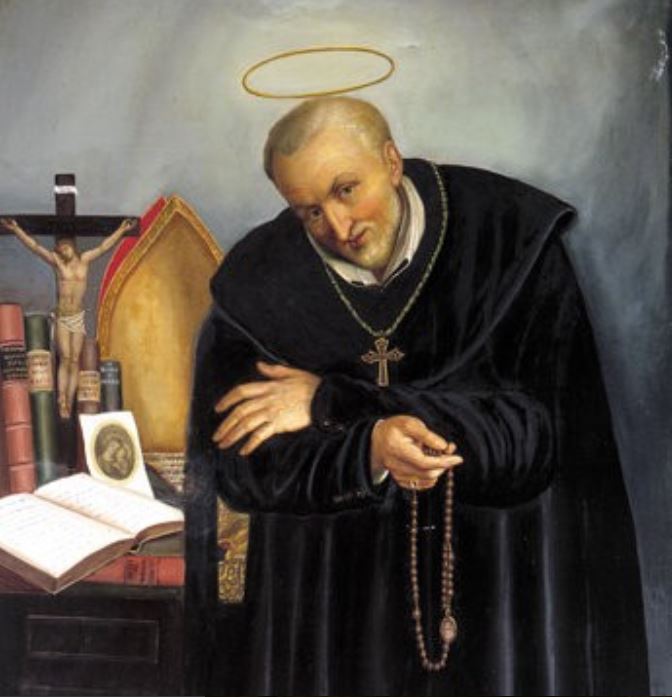
JESUS CHRIST has instituted two orders in his church: one, of the simple faithful; the other, of ecclesiastics: but with this difference, that the former are disciples and sheep, the latter are masters and shepherds. To the laity St. Paul says: Obey your prelates, and be subject to them. For they watch as being to render an account of your souls. 1 And to ecclesiastics St. Peter has said: Feed the flock of God which is among you2 And in another place we read: Take heed to yourselves, and to the whole flock wherein the Holy Ghost hath placed you bishops, to rule the church of God. 3
Hence St. Augustine has well said, that ” there is nothing more difficult, nothing more dangerous, than the office of priest.” 4 The difficulty and danger of the office of a priest arise precisely from his obligation to lead a holy life, not only by interior, but also by exterior sanctity, that others may learn from him, holiness of life. ” If the one that is over thee is good, he will be thy nurse; if bad, he will be thy tempter,” writes the same saint. 5
1 “Obedite præpositis vestris, et subjacete eis; ipsi enim pervigilant, quasi rationem pro animabus vestris reddituri.” Heb, xiii. 17.
2 “Pascite, qui in vobis est, gregem Dei.” i Pet. v. 2.
3 “Attendite vobis et universo gregi, in quo vos Spiritus Sanctus posuit episcopus, regere Ecclesiam Dei.” Acts, xx. 28.
4 Epist. 21, E. B.
5 “Bonus si fuerit, qui tibi præest, nutritor tuus est; malus si fuerit, tentator tuus est,.” Serm. 12, E. B.
The Scripture says that in Jerusalem the people lived in holiness because of the godliness of Onias the high priest.1 And according to the Council of Trent, “The integrity of those who govern is the safety of the governed.”2 But, on the other hand, how great the havoc, how strong the temptations, caused by the bad example of a priest ! My people, says the Lord, by the mouth of the prophet Jeremias, have been a lost flock; their shepherds have caused them to go astray.3 “God,” writes St. Gregory, “suffers from no one more than from priests whom he has appointed for the salvation of others, and whom he sees giving bad example.”4 St.Bernard says “that seculars,
seeing the sinful life of the priest, think no more of amending their conduct, but begin to despise the sacraments, and the rewards and punishments of the next life.” “Very many,” writes the holy Doctor, “beholding the wicked life of an ecclesiastic, indulge in vices, despise the sacraments, feel no horror of hell, nor the smallest desire of heavenly things.”5 For, like the man of whom St. Augustine writes, they say: “Why do you correct me? Do not ecclesiastics do what I do? And do you compel me to abstain from
it?”6 Our Lord said to St. Bridget: “At the sight of the bad example of the priest the sinner assumes confidence in sinning, and begins to boast of sins which he before regarded as shameful.” 7
1 “Propter Oniæ pontificis pietatem.” 2 Mach. iii. i.
2 “Integritas præsidentium salus est subditorum.” Sess. 6, de Ref. c, i.
3 Grex perditus factus est populus meus; pastores eorum seduxerunt eos.” Jer. 1 6.
4 “Nullum majus præjudicium, quam a Sacerdotibus, tolerat Deus, quando eos, quos ad aliorum correctionem posuit, dare de se exempla pravitatis cernit.” In Evang. Hom.17.
5 “Plurimi, considerantes cleri sceleratam vitam, Sacramenta despiciunt, vitia non evitant, non horrent inferos, cœlestia minime concupiscunt.” T. I. s. 19, a. 2, c. i.
6 “Quid mihi loqueris ? Ipsi clerici non illud faciunt, et me cogis ut faciam ?” Serm. 137, E. B.
7 “Viso exemplo pravo Sacerdotum, peccator fiduciam peccandi sumit, et incipit de peccato, quod prius putabat erubescibile, gloriari.” Rev. 1. 4, c. 132.
“Priests in the Church,” says St. Gregory, “are the foundations of the Church.”1
When the foundations give way the whole edifice falls. Hence, in the ordination of priests, the holy Church prays for them in the following words: “May they shine before others by showing an example of justice, constancy, mercy, and other virtues.” 2 Priests ought not only to be holy, but they should also show forth sanctity in their lives: for, says St. Augustine, as a good conscience is necessary for a priest to save his own soul, so he requires a good reputation in order to save his neighbor; otherwise, though he might be merciful and attentive to himself, he would be cruel towards others, and thus should bring himself and them to perdition.3 God has selected priests from among men, not only that they may offer sacrifices, but also that by the good odor of their virtues they may edify the rest of the Church. He chose him out of all men living to offer sacrifice to God, incense, and a good savor.4
Priests are the salt of the earth. 5
“Then,” says the Gloss, “priests should give a savor to others, and render them grateful to God, instructing them in the practice of virtue, not only by preaching, but still more by the example of a holy life.”6 Priests are also the light of the world. 7
1 “Sacerdotes in Ecclesia, bases in templo.” In Evang. Hom.17.
2 “Justitiam, constantiam, misericordiam, fortitudinem, cæterasque virtutes, in se ostendant; exemplo præeant.”
3 “Conscientia tibi, fama proximo tuo; qui, fidens conscientiæ tuæ, negligit famam suam, crudelis est.” Serm. 355, E. B.
4 “Ipsum elegit ab omni vivente, offerre sacrificium Deo, incensum, et bonum odorem.” Ecclns. xlv. 20.
5 “Vos estis sal terræ.” Matt. v. 14.
6 “Condientes alios doctrina et vitæ exemplo.”
7 “Vos estis lux mundi” Matt. v. 13.
The priest, then, as our divine Master proceeds to say, should shine refulgent among the people by the splendor of his virtues, and thus give glory to that God who has con ferred on him an honor so singular and sublime. So, said the Redeemer, let your light shine before men, that they may see your good works, and glorify your Father who is in heaven1 Of this obligation St. John Chrysostom reminds priests.
“Therefore,” says the saint, “has God chosen us that we may be luminaries.” 2 Pope Nicholas has written the same, saying that priests are the stars that enlighten the people on every side. 3 “They are,” said the Pontiff, according to the words of Daniel, they that instruct many to justice shall shine as stars for all eternity, “stars shedding light on their neighbors, far and wide.”4 But, to be a luminary, it is not enough for the priest to enlighten by his words: he must also give light by his good example. ” For the life of a priest,” as St. Charles Borromeo used to say, “is precisely the beacon on which seculars, navigating in the midst of the ocean and darkness of the world, keep their eyes fixed in order to escape destruction.” And before him St. John Chrysostom said: “The priest ought to lead a life of order, that all may look to him as to an excellent model; for God has chosen us, that we might be, as it were, luminaries and teachers to others. ” 5
1 “Sic luceat lux vestra coram hominibus, ut videant opera vestra bona, et glorificent Patrem vestrum, qui in cœlis est.” Matt, v. 16.
2 “Idcirco nos elegit, ut simus quasi luminaria.” In 1 Tim. Hom.10.
3 “Stellæ longe lateque proximos illuminantes.” Ep. ad Synod. Silvan.
4 “Fulgebunt . . . qui ad justitiam erudiunt multos, quasi stellar in perpetuas æternitates. ” Dan. xii. 3.
5 “Sacerdos debet vitam habere compositam, ut omnes in ilium veluti in exemplar excellens intueantur; idcirco enim Deus nos elegit, ut simus quasi luminaria et magistri cæterorum.” In i Tim. Hom.10..
The life of the priest is the light that is placed on the candlestick to give light to all. Neither do men light a candle and put it under a bushel, but on a candlestick, that it may shine to all that are in the house. 1 Hence the Council of Bordeaux said: “The life of clerics is so exposed to the eyes of all, that all will be inspired by them to lead either a good or a bad life.”2 The priest, then, is the light of the world; but if the light be changed into darkness, what must become of the world ?
Priests are also, as St. Jerome calls them, the fathers of Christians. 3 “If then,” adds St. John Chrysostom, “priests are the fathers of all, it is their duty to attend to all their spiritual children, edifying them first by a holy life, and afterwards by salutary instructions.”4 If he give bad example, his spiritual children will imitate him. “What,” says Peter de Blois, ” will a layman do but what he has seen done by his spiritual father?” 5
Priests are also the teachers and models of virtue. Our Saviour said to his disciples: As the Father hath sent Me, I also send you.6 As the eternal Father, then, sent Jesus Christ into the world to be a model for imitation, so Jesus Christ has placed priests in the world to be patterns of all virtues. This the very words sacerdos and presbyter signify. Sacerdos, says Peter de Blois, “means one that gives what is holy, for he gives what is holy of God, that is the sacrament; he gives what is holy for God, that is a good example.” 7
1 “Neque accendunt lucernam, et ponunt eam sub modio, sed super candelabrum, ut luceat omnibus qui in domo sunt.”
2 “Clerici vita omnium oculis sic exposita est, ut inde bene vel male vivendi exempla duci soleant.” Anno 1583, c. 21.
3 “Patres christianorum.”
4 “Quasi totius orbis pater Sacerdos est; dignum igitur est ut omnium curam agat.” In i Tim. Hom.6.
5 “Quid faciet laicus, nisi quod patrem suum spiritualem viderit facientem?” Serm. 57.
6 “Sicut misit me Pater, et ego mitto vos.” John, xx. 21.
7 “Sacerdos dicitur quasi sacrum dans: dat enim sacrum de Deo, id est, prædicationem; sacrum Deo, orationem; sacrum Dei, carnem et sanguinem; sacrum pro Deo, vivendi exemplum.” Serm. 38.
Another author says that the word presbyter signifies “one who shows to the people (by word and example) the way from exile to the kingdom of heaven.”1 This, the Apostle has taught: In all things show thyself an example, . . . that he who is on the contrary part may be afraid, having no evil to say of us 2 St. Peter Damian says that the Lord has separated priests from the laity that they may observe a rule of life different from that which the people follow. 3 And from this rule seculars learn to lead a life of virtue. Hence St. Peter Chrysologus calls the priest “the form of virtues.” 4 And, addressing a priest, St. John Chrysostom has said: “Let the splendor of your life be the common school and model of virtues.”5 This, as St. Bernard writes, the sacerdotal ministry itself demands. 6 In order to see the people sanctified, David prayed to the Lord in the following words: Let Thy priests be clothed with justice, and let Thy saints rejoice. 7 To be clothed with justice, the priest must give an example of every virtue, of zeal, of humility, of charity, of modesty, etc. In a word, St. Paul says, that we priests should, by holiness of life, show ourselves to be true ministers of the God of holiness. But in all things let its exhibit ourselves as the ministers of God, . . . in chastity, in knowledge, in long-suffering, etc. 8
1 “Presbyter dicitur præbens iter, scilicet populo, de exsilio hujus mundi ad patriam cœlestis regni.” Gemma an. 1. I, c. 181.
2 “In omnibus teipsum præbe exemplum, . . . ut is qui ex adverse est, vereatur, nihil habens malum dicere de nobis.” Tit. ii. 8.
3 “Ut quid enim a populo (Sacerdotes) segregantur, nisi ut divisam a populo vivendi regulam teneant?” Opusc, 18, d. 2, c. 2.
4 “Forma virtutem.” Serm. 26.
5 “Sit communis omnibus schola exemplarque virtutum vitæ tuæ splendor.” In Tit. hom. 4.
6 “Cathedram sanctitatis exigit ministerium hoc.”
7 “Sacerdotes tui induantur justitiam, et sancti tui exsultent.” Ps, cxxxi. 9.
8 “In omnibus exhibeamus nosmetipsos sicut Dei ministros, … in castitate, in scientia, in longanimitate . ., .” 2 Cor. vi. 4.
And before him Jesus Christ taught the same: If any man minister to Me, let him follow Me. 1 Hence priests should copy in their life the example of Jesus Christ, so that, as St. Ambrose says, they may give such edification that every one that beholds them may bear testimony to their sanctity, and venerate that God who has such ministers. 2 Hence Minutius Felix writes, that we priests should make ourselves known as priests, not by splendor of dress nor by ornaments of the head, but by modesty and innocence of life. 3 Priests are placed in the world to wash away the stains of others. Hence, says St. Gregory, they must be holy, and appear holy. 4
The priest is the leader of the people 5 says St. Peter Damian. But, according to St Denis, no one should dare to become a guide to others in what relates to God, unless he himself be made in all things like to God. 6 And Philip the Abbot said: ” The life of ecclesiastics is the form of the laity; the former should go before as leaders, and the latter follow as flocks.” 7 St. Augustine calls priests, the rulers of the earth. 8 “He, then, who is placed over others for their correction must be irreprehensible,” says Pope Hormisdas. 9
1 “Si quis mihi ministrat, me sequatur.” John, xii. 26.
2 “Docet actuum nostrorum testem esse publicam existimationem, ut, qui videt ministrum congruis ornatum virtutibus Dominum veneretur, qui tales servulos habeat.” De Offic. 1. i, c. 50.
3 “Nos, non notaculo corporis, sed innocentiæ ac modestiæ signo facile dignoscimus.” Octav. c. 9.
4 “Necesse est ut esse munda studeat manus, quæ diluere aliorum sordes curat.” Past. p. 2, c. 2.
5 “Sacerdos, dux exercitus Domini.” Opusc. 25, c. 2.
6 “In divino omni non audendum aliis ducem fieri, nisi secundum omnem habitum suum factus sit deiformissimus et Deo simillimus.”- De Eccl. Hier. c. 3. S. Thomas, Suppl. q. 36, a. i.
7 “Vita clericorum forma est laicorum, ut illi tamquam duces progrediantur, isti vero tamquam gregessequantur.” De Dignit. cler, c. 2.
8 “Rectores terræ.”
9 “Irreprehensibiles esse convenit, quos præesse necesse est corrigendis.” Ep. ad Episc. Hispan.
And according to the Council of Pisa, “as ecclesiastics enjoy an exalted dignity, so they ought to shine with the light of virtues, and profess a kind of life which may excite others to sanctity.” 1 For, as St. Leo has written, “The integrity of those that preside is the salvation of the subjects.” 2
St. Gregory of Nyssa calls the priest a teacher of sanctity. 3 But if the master exhibit pride, how can he teach humility? If he be vindictive, how can he inculcate meekness? “He,”says St. Isidore, “who is appointed to instruct the people must be holy in all things.” 4 And if our Lord has said to all: Be you therefore, perfect, as also your heavenly Father is perfect. 5 How much more, says Salvian, will he demand perfection from priests, who are to teach all the people? 6 How can he inflame others with the love of God unless he shows by his works that his own heart burns with that holy fire? “He,” says Gregory, “who does not burn, does not inflame?” 7 and St. Bernard writes, that to him who loves not, the language of love is a strange and barbarous tongue. 8
1 “Ecclesiastici, quemadmodum eminent gradu, sic lurnine virtutum prælucere debent, et profited genus vivendi, quod alios excitet ad sanctitatem.”
2 “Integritas præsidentium salus est subditorum.” Ep. ad Episc. Afr. c. i.
3 “Doctor pietatis.” In Baptism. Chr.
4 “Qui in erudiendis atque instituendis ad virtutem populis præerit, necesse est ut in omnibus sanctus sit.” De Off. Eccl. 1. 2, c. 5.
5 “Estote ergo vos perfecti, sicut et Pater vester cœlestis perfectus est.” Matt. v. 48.
6 “Si viris in plebe positis tam perfectam Deus vivendi regulam dedit, quanto esse illos perfectiores jubet, a quibus omnes docendi sunt ut possint esse perfecti!” Ad Eccl. Cathol. 1. 2.
7 “Lucerna quæ non ardet, non accendit.” In Ezech. Hom.11
8 “Lingua amoris, ei qui non amat, barbara est.” In Cant. s. 79.
Hence St. Gregory says that the priest who does not give good example will bring contempt on his preaching,1 and on all his spiritual functions, says St. Thomas. 2 The Council of Trent ordains that they only are to be admitted to the priesthood who are “conspicuous for piety and chasteness of morals, as that a shining example of good works and a lesson how to live maybe expected from them.”3 But observe, that good example should be first expected, and after wards salutary instructions; the Council calls good example a perpetual kind of preaching. 4 Priests, then, should preach, first by example, and afterwards by words, “Their life,” says St. Augustine, “must be a sermon of salvation to others.” 5 And St. John Chrysostom writes: “Good example gives forth a louder sound than trumpets, . . . for people pay more attention to our deeds than to our words.” 6 Hence St. Jerome said to Nepotianus: “Let not works confound your preaching, lest when you speak in the church every one should tacitly answer, Why, then, do you yourself not practise what you preach?”7
1 “Cujus vita despicitur, restat ut ejus prædicatio contemnatur.” In Evang. Hom.12.
2 “Et eadem ratione, omnia spiritualia exhibita.” Suppl. q. 36, a. 4
3 “Ita pietate ac castis moribus conspicui, ut pneclarum bonorum operum exemplum et vitæ monita ab eis possint expectari.” Sess. 23, de Ref. c. 14.
4 “Est perpetuum prædicandi genus.”
5 “Quorum vita aliorum debet esse salutis prædicatio.” Serm. 291, E. B. app.
6 “Bona exempla voces edunt omni tuba clariores.” In Matt. Hom.15
7 “Non confundant opera tua sermonem tuum, ne, cum in ecclesia loqueris, tacitus quilibet respondeat: Cur ergo hæc, quædicis, ipse non facis ?” Ep. ad Nepotian.
St. Bernard has written: “You will give power to your voice when people see that you have previously taken the advice yourself before you have given it to others; for action is more powerful than speaking.”1 To persuade others, the preacher must show that he himself is convinced of the truth of his doctrine; but how can he evince such a conviction when his conduct is in opposition to his preaching? “He,” says the author of the Imperfect Work, “who neglects to practise what he teaches, teaches not others, but condemns himself.”2 The sermon, says St. Gregory, which is commended by the life of the preacher persuades and moves. 3 Men believe the eyes sooner than the ears, that is, they are convinced more easily by the examples that they see than by the words that they hear. “Since,” says an ancient Council, “men believe the eyes rather than the ears, it is necessary for a priest to give good example, as well in dress as in all his actions.”4 Priests are, as the Council of Trent says, the mirrors of the world, in which all look at themselves, and from which they take examples for the regulation of their life: “Others fix their eyes upon them as upon a mirror, and derive from them what they are to imitate.”5
And long before the holy Council, St. Gregory said the same: “The priest should shine before others by good example, for the people see in him, as in a mirror, what they must do, what they must avoid.”6 
1 “Dabis voci tuæ vocem virtutis, si, quod suades, prius tibi illud cognosceris persuasisse. Validior operis quam oris vox.” In Cant. s. 59
2 “Qui non facit quod docet, non alium docet, sed semetipsum condemnat.” Hom.10.
3 “Ilia vox libentius auditorum corda penetrat, quam dicentis vita commendat.” Past. p. 2, c. 3.
4 “Quoniam magis oculis quam auribus credunt homines, necesse est ut Sacerdos bonum præbeat exemplum, tarn in vestitu quam in reliquis actionibus.”
5 “In eos tamquam in speculum reliqui oculos conjiciunt, ex iisque sumunt quod imitentur.” Sess. 22, de Ref. c. I.
6 “Decet Sacerdotem moribus clarescere, quatenus in eo, tamquam in vitæ suæ speculo, plebs, et eligere quod sequatur, et videre possit quod corrigat.” Epist. 17, ind. i, ep. 32.
And the Apostle writes: We are made a spectacle to the world, and to angels, and to men.1
Everything belonging to the priest demands sanctity. “The clerical dress,” says St. Jerome, “the state of life, require of him
sanctity of life.”2 According to St. Eucherius, priests bear the weight of the whole world, that is, they are bound by their obligations to save all souls. But how are they to save them? By the power of their sanctity and holy example. 3 Hence the Council of Valentia said: “By the gravity of his dress, by his looks and words, the priest should show that he is a model of discipline and modesty.”4
The priest should then, in the first place, exhibit gravity in his dress: but can priests give an example of modesty, if, instead of wearing the clerical costume, they display vanity and extravagance in their apparel? Secondly, the priest should exhibit gravity in his countenance: in order to set an example of modesty, he must keep his eyes cast down, not only when he is on the altar and in the church, but also in all places in which there are women. Thirdly, to exhibit gravity in his words, he must carefully abstain from uttering certain worldly maxims, and certain jests that are contrary to modesty. The Fourth Council of Carthage ordained that the ecclesiastic who indulges in immodest jests should be suspended from his office. 5
1 “Spectaculum facti sumus mundo, et Angelis et hominibus.” i Cor. iv. 9.
2 “Clamat vestisclericalis, clamat status professi animi sanctitatem.”
3 “Hi onus totius orbis portant humeris sanctitatis.” Hom, de Dedic. eccl.
4 “Sacerdos de religione sua, in habitus, vultus, acsermonis gravitate, talem se exhibere studeat, ut se formam discipline ac modestiæ infundat.” Anno 855, can. 15.
5 “Clericus verbis turpibus jocularis ab officio removendus.” Cap. 60.
 But you may ask, What harm is there in such jests? “Words,” says St. Bernard, “that are jests among seculars are in the mouth of a priest blasphemies which excite horror.”1 The saint adds: “You have dedicated your mouth to the Gospel; but to open it for such things is not allowed: to accustom ones self to doing so would be a sacrilege.”2
St. Jerome writes: “All that does not edify the hearers is dangerous to those that say it.”3
Some things that are trifling in seculars are criminal in a priest; for every bad example by which he leads others into sin is in him a grievous transgression. “What is for the people only a venial sin,” says Peter de Blois, “is criminal in the priest, because every fault of the shepherd becomes mortal by the scandal that accompanies it.”4
St. Gregory Nazianzen writes: “Spots on a garment are more visible, the more beautiful the garment.”5 In a splendid garment stains are most conspicuous, and produce great deformity.
It is also necessary for the priest to abstain from every species of detraction. St. Jerome says that some renounce other vices, but they appear to think it impossible to give up the sin of detraction. 6 It is also necessary to avoid familiar intercourse with seculars. The conversations of seculars breathe an infectious air, which, as St. Basil says, gradually destroys the health of the soul. 7
1 “Inter sæculares, nugæ sunt; in ore Sacerdotis, blasphemiæ.”
2 “Consecrasti os tuum Evangelic; talibus aperire, illicitum; assuescere, sacrilegum.” De Cons. 1. 2, c. 13.
3 “Omne quod non ædificat, in periculum vertitur loquentium.”
4 “Quod veniale est plebi, criminale est Sacerdoti. Quod erroneum est ovi, peremptorium est pastori.” Ad Past, in syn. s. 3.
5 “Splendidæ vestis manifestiores sunt maculæ.” Orat. 31.
6 “Qui ab aliis vitiis recesserunt, in istud tamen, quasi in extremum diaboli laqueum, incidunt.” Ep. ad Celant.
7 “Sicut in pestilentibus locis sensim attractus ær morbum injicit, sic in prava conversatione mala hauriuntur, etiamsi statim incommo dum non sentiatur. ” Hom.Quod D. non sit auct. mal 16
Finally, the priest must abstain from certain secular amusements, at which the presence of an ecclesiastic does not give edification, such as profane comedies, balls and parties where women are present. But, on the other hand, the priest ought to be seen at prayer in the church, making thanksgiving after Mass, and visiting the Blessed Sacrament, and the images of the divine mother. Some perform these devotions in private, lest they might be seen by others; but it is better for priests to perform them in public, not to seek praise, but to give good example, and thereby induce others to praise God. That they may see your good works, and glorify your Father who is in heaven.1
1 “Videant opera vestra bona, et glorificent Patrem vestrum, qui in cœlis est.” Matt. v. 16.
